
Amazon Prime continues to grow as one of the most popular subscription services worldwide.
With over 240 million members globally and nearly 201 million in the United States, Prime changes how people shop, save time, and watch entertainment.
This guide shows you the latest numbers and teaches you practical ways to get the most value from your membership.
Whether you want to save on shipping, discover streaming shows, or find Prime Day deals, the statistics reveal real opportunities to improve your daily life.
Let’s explore what the numbers tell us about Amazon Prime in 2026.
How Many People Use Amazon Prime?
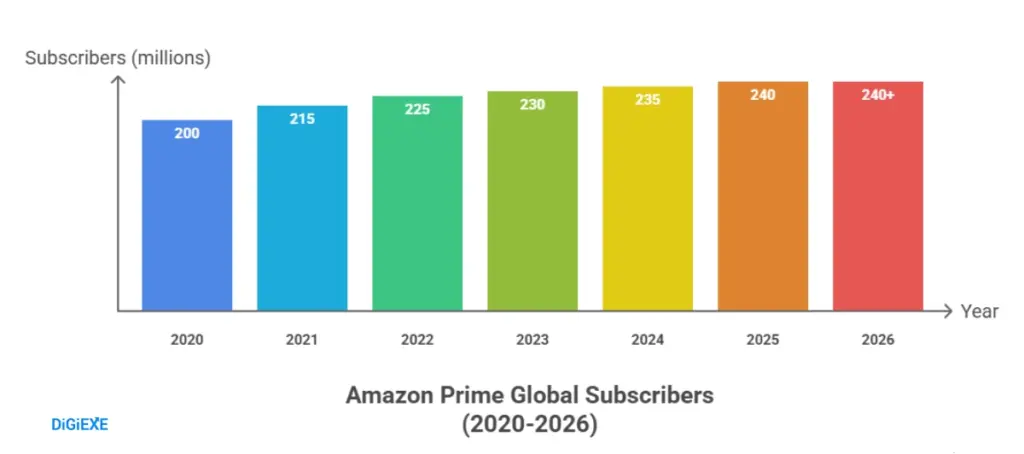
Amazon Prime reached 240 million subscribers worldwide by mid-2026. This number keeps growing as more people in Asia, Latin America, and Africa discover the service.
The company expects to reach 300 million members by 2030.
| Year | Global Subscribers (Millions) | Growth Rate (%) |
|---|---|---|
| 2020 | 200 | 33.3 |
| 2021 | 215 | 7.5 |
| 2022 | 225 | 4.7 |
| 2023 | 230 | 2.2 |
| 2024 | 235 | 2.2 |
| 2025 | 240 | 2.1 |
| 2026 | 240+ | Growing |
United States Dominance
The U.S. has the most Prime members. In December 2025, 201 million Americans held Prime memberships.
This represents about 62% of the total U.S. population. The U.S. accounts for roughly 84% of all Prime members worldwide.
| Year | U.S. Subscribers (Millions) |
|---|---|
| 2022 | 168.3 |
| 2023 | 174.9 |
| 2024 | 180.1 |
| 2025 | 201 |
Also read about: Amazon Statistics
Who Joins Prime and Why?
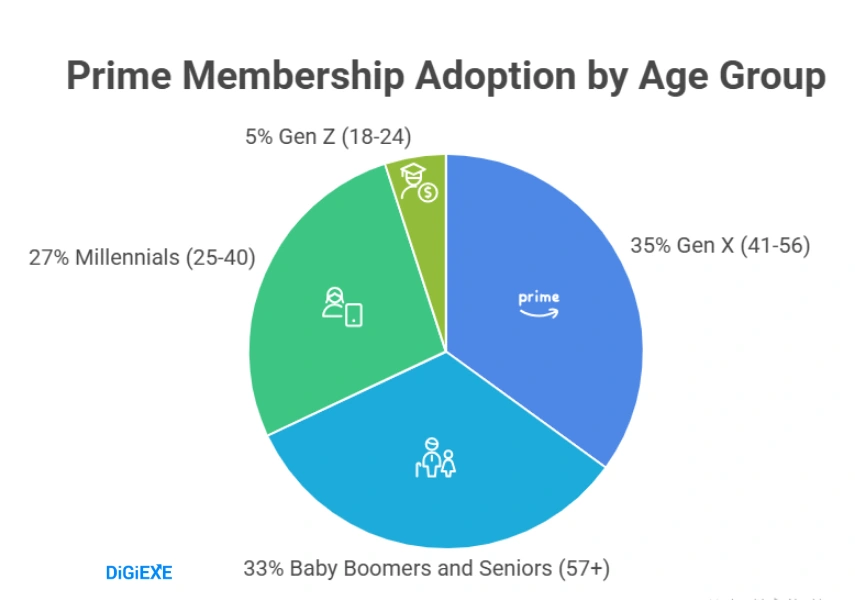
Prime members come from all age groups and backgrounds. Here’s what we learn from the data:
Age Groups
Gen X (ages 41-56) leads Prime adoption at 35% of their age group. Baby Boomers and seniors (57+) follow at 33%, valuing easy access to groceries and books.
Millennials (25-40) represent 27% of the user base. Gen Z (18-24) shows the lowest adoption at just 5%, though this group is growing as more college students discover student discounts.
Gender
Women make up 52% of Prime members, attracted by fashion and beauty deals. Men represent 48% of members, often focusing on tech and electronics.
Location
About 65% of Prime members live in cities. Urban shoppers benefit most from same-day and one-day delivery options. People in rural areas now gain access through drone delivery pilots that launched in select cities during 2025.
Also read about: Disney Plus Statistics
Money Behind Amazon Prime
Subscription Revenue
Amazon Prime generated massive subscription revenue in 2025. Here are the quarterly numbers:
| Quarter | Revenue (Billions USD) | Growth |
|---|---|---|
| Q1 2025 | $11.715 | 2% |
| Q2 2025 | $11.80 | Stable |
| Q3 2025 | $12.57 | 11% |
| Q4 2025 | $13.1 | 14% |
The full year 2025 brought in approximately $47-49 billion in subscription revenue alone.
Amazon’s Total Revenue
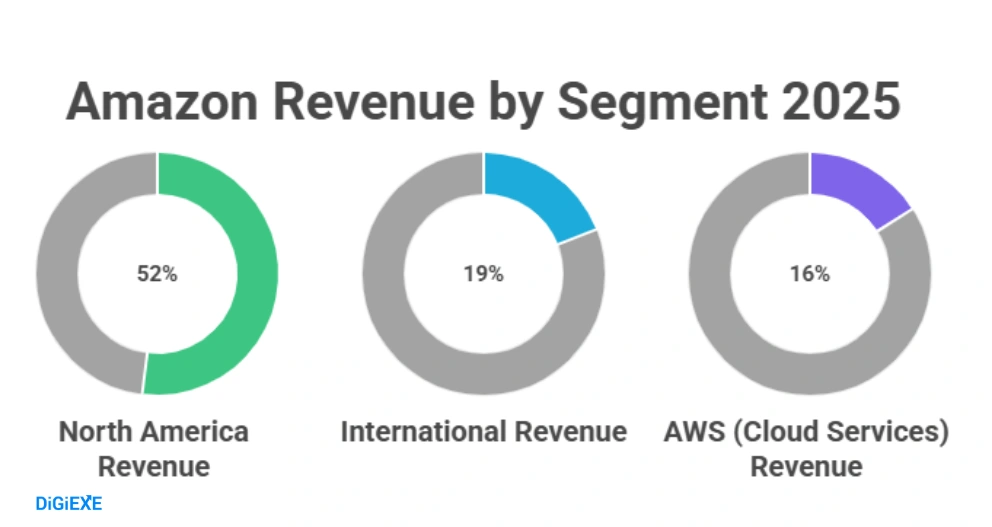
Amazon’s overall business grew strongly in 2025. The company reported $716.9 billion in total revenue, up 12% from 2024’s $638 billion.
| Segment | 2025 Revenue (Billions USD) |
|---|---|
| North America | $372 |
| International | $134 |
| AWS (Cloud Services) | $117 |
| Total | $716.9 |
Prime Day: The Biggest Shopping Event
July 2025 Prime Day
Amazon held its first-ever four-day Prime Day in July 2025. Customers spent a record-breaking $24.1 billion across all U.S. retailers during this event, up 30.3% from 2024.
Key numbers from July Prime Day:
- Total sales: $24.1 billion
- Average order value: $53.34
- Items sold: 300+ million
- Kids’ apparel sales jumped 250%
- Home security products sales increased 185%
- School supplies sales rose 175%
October 2025 Prime Big Deal Days
Amazon held another major sale event in October 2025, called Prime Big Deal Days. This was the biggest October sales event on record.
- Total U.S. retail spending: $9.1 billion (up 7.3% from 2024)
- This event attracted customers looking for practical bargains rather than luxury items
| Prime Day Event | Year | U.S. Sales (Billions USD) |
|---|---|---|
| July Prime Day | 2024 | 14.2 |
| July Prime Day | 2025 | 24.1 |
| October Prime Day | 2024 | 8.5 |
| October Prime Day | 2025 | 9.1 |
Prime Video: Streaming Entertainment
Market Leadership
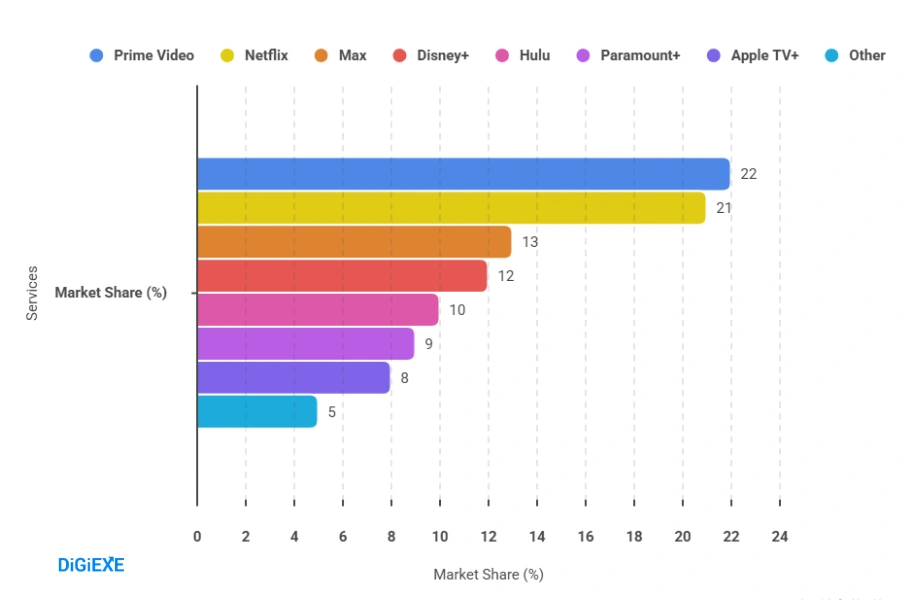
Prime Video now leads the U.S. streaming market with a 22% share, just slightly ahead of Netflix’s 21% share. Amazon achieves this dominance by bundling Prime Video free with Prime memberships.
Users and Viewers
- Prime Video reaches 210+ million users worldwide
- In the U.S., 163.6 million people watch Prime Video regularly
- About 61% of Prime members watch Prime Video weekly
- Only 11% of Prime members never use the service
Streaming Market Share
| Service | Market Share (%) |
|---|---|
| Prime Video | 22 |
| Netflix | 21 |
| Max | 13 |
| Disney+ | 12 |
| Hulu | 10 |
| Paramount+ | 9 |
| Apple TV+ | 8 |
| Other | 5 |
Sports and Live Events
Prime Video expanded its sports offerings significantly. The service averages 13.2 million viewers per NFL Thursday Night Football game. Cricket streams in 4K draw millions of fans from India and worldwide.
International Reach
Prime Video serves viewers across many countries:
| Country | Viewers (Millions) |
|---|---|
| United States | 163.6 |
| India | 65.9 |
| Germany | 32.3 |
| United Kingdom | 26.9 |
| Japan | 16.2 |
How Much Prime Members Spend
Spending Comparison
Prime members spend significantly more on Amazon than non-members. Here’s what the data shows:
- Prime members spend an average of $1,400 per year on Amazon
- Non-Prime members spend an average of $600 per year
- Prime members place an average of $91.75 in spending per month
- Non-Prime members spend an average of $38 per month
Why Members Spend More
Prime members order more frequently because:
- Free and fast shipping removes the cost barrier for smaller purchases
- They use Prime Video and other included services
- Amazon shows them personalized deals and recommendations
- Prime Day sales attract bulk purchases
- Family members share one Prime membership
Key Takeaways: Use Prime Wisely
Track Your Usage
Calculate your Prime return on investment by counting:
- Shipping fees you save (typically $5-15 per order)
- Movies and shows you watch
- Grocery orders from Whole Foods
- Books read through Prime Reading
Maximize Prime Day Savings
- Use price-tracking tools like CamelCamelCamel to verify real discounts
- Pre-load your wishlist before the event starts
- Stack cashback from credit cards or shopping portals
- Plan big purchases around Prime Day for extra savings
Share Your Membership
Amazon Household lets you:
- Add up to two adults to one Prime membership
- Include four teens or children
- Pay nothing extra for the additional users
- Each family member gets their own recommendations
Try Before You Commit
New customers get a 30-day free trial. Students get six months free through Prime Student. This lets you test the service before paying.
What to Expect in 2026
Drone Delivery Expansion
Amazon continues expanding drone delivery to more cities. By 2026, residents in select areas can receive packages in 30 minutes through drone delivery.
New Features
- AI-personalized recommendations will improve
- Sports betting integration with FanDuel during live games continues
- Ad-supported tier continues at lower cost
- Premium ad-free options available
International Growth
Amazon pushes Prime into emerging markets with:
- Lower-priced plans for developing countries
- Localized content and deals
- Faster shipping in major cities abroad
Frequently Asked Questions
1. How can I save the most during Prime Day?
Create a wishlist weeks ahead and use price-tracking tools to find genuine discounts. Shop on day one when selection is best. Stack cashback rewards from credit cards. Combine multiple discounts for maximum savings.
2. Is Prime worth the $139 annual cost?
Most members break even within three to five months through shipping savings alone. If you watch Prime Video, order groceries, or use other services, the value increases significantly. Calculate your own usage against the fee.
3. What new features appear in 2026?
Watch for expanded sports betting during live events, AI that better learns your preferences, and drone delivery in more cities. Ad-supported tiers will expand to include more shows and movies.
4. Can I share Prime with people outside my household?
Amazon Household officially allows sharing with up to two other adults and four children. Members must live at the same address to qualify.
5. How many items sell during Prime Day?
July 2025 Prime Day saw over 300 million items sell. October 2025 also broke records. Prime Day attracts massive inventory from sellers across all categories.
Also Read:
- Quora Statistics
- Google Chrome Statistics
- Content Marketing Statistics
- Threads Statistics
- Apple Statistics
Final Thoughts
Amazon Prime statistics for 2026 show that the service serves over 240 million people globally.
With $24.1 billion in July Prime Day sales and a leading 22% share of the streaming market, Prime proves its value to millions of families and individuals.
By understanding these numbers, you position yourself to extract the maximum value from your membership through smarter shopping, better streaming choices, and better deal timing.
Track your usage quarterly. Compare what you spend against what you save. For most users, Prime delivers genuine value that extends far beyond simple shopping convenience.
Source: Statista, Business of Apps
