
Webinars continue to dominate digital marketing and training strategies in 2025, and the latest webinar statistics 2025 prove exactly why thousands of businesses, educators, and creators now host them every single day.
More than sixty million webinars will take place globally this year, delivering qualified leads at a fraction of the cost of traditional events while building genuine trust with audiences worldwide.
Marketers who master the newest data-driven insights achieve attendance rates above 60%, convert up to 73% of B2B attendees into pipeline opportunities, and generate returns that far exceed almost every other content format.
This complete guide combines the freshest 2025 research with real questions marketers are asking right now on Reddit and Quora so you can stop guessing and start hosting webinars that actually fill seats, keep viewers engaged for the full session, and turn participants into loyal customers or students.
Why Webinars Remain the Highest-ROI Marketing Channel
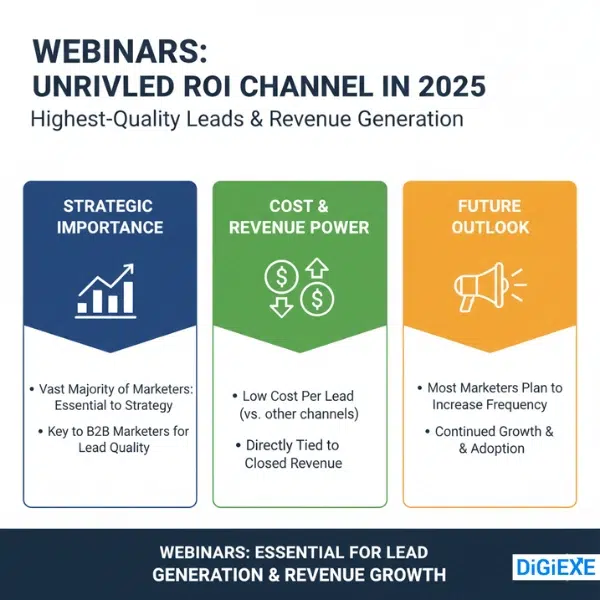
Ninety-five percent of marketers consider webinars important or extremely important to their overall strategy, while 85% declare them absolutely essential.
Seventy-three percent of B2B marketers and sales leaders name webinars as the single best way to generate high-quality leads, far ahead of paid ads, trade shows, or cold outreach.
The numbers explain the enthusiasm: webinars cost an average of only $72 per lead compared to $800+ for in-person events, and 68% of organizations now directly attribute closed revenue to webinars.
| Key Webinar Effectiveness Statistics 2025 | Value |
| Marketers who say webinars are essential | 85% |
| B2B marketers ranking webinars #1 for lead quality | 73% |
| Average cost per lead from webinars | $72 |
| Organizations tying webinars to revenue | 68% |
| Marketers planning to increase webinar frequency | 57% |
Webinar Attendance Rates – What the 2025 Data Really Shows
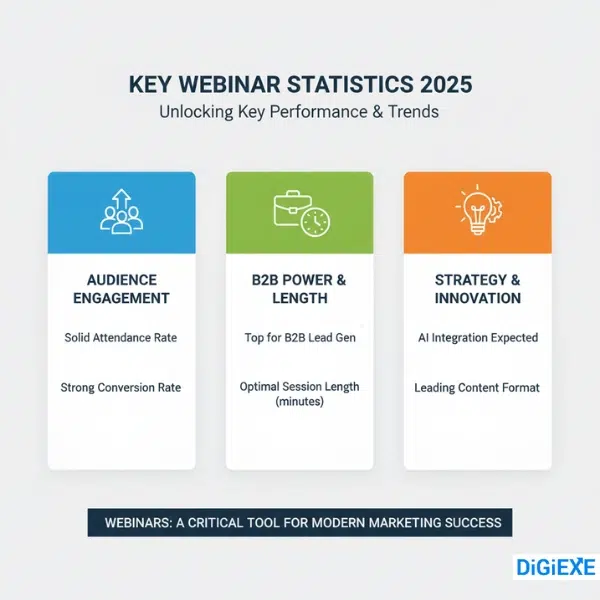
The average webinar attendance rate in 2025 sits between 40% and 50% of registrants, but top performers consistently push past 60% and even reach 90% with the right tactics.
Smaller webinars (under 100 registrants) enjoy 5–10% higher show-up rates because the content feels more personalized and exclusive.
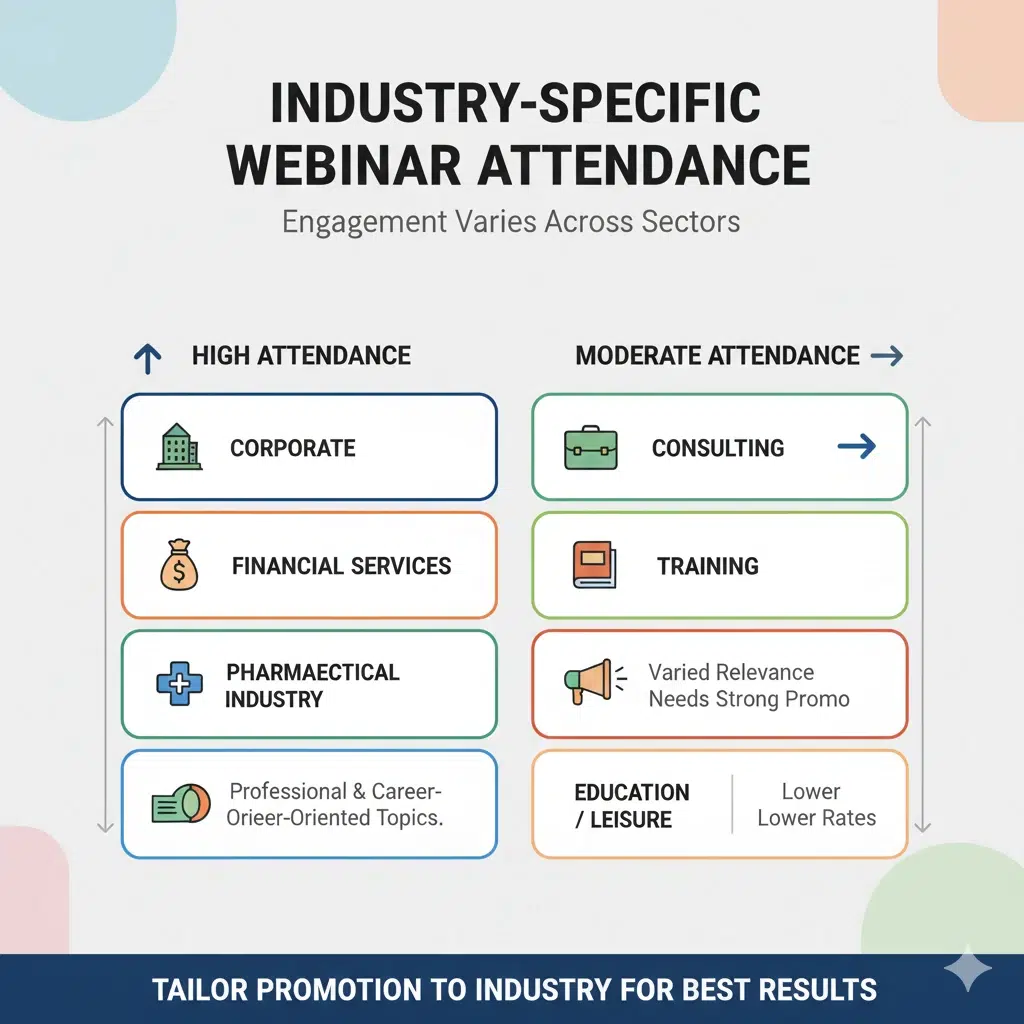
Industry dramatically affects turnout. Financial services and pharmaceutical webinars regularly hit 61% attendance, consulting reaches 50%, while education and hobby-related sessions sometimes dip below 30%.
Reddit threads in r/marketing and r/Entrepreneur repeatedly confirm that the biggest jump in attendance comes from sending three automated reminders (24 hours, 1 hour, and 5 minutes before start) and adding a simple calendar invite link.
| Webinar Attendance Rate by Day of Week 2025 | Live Attendance |
| Wednesday Wednesday | 48% |
| Thursday | 45% |
| Tuesday | 43% |
| Monday/Friday | below 35% |
Wednesday currently delivers the highest live attendance at 48%, followed closely by Thursday and Tuesday. Friday and Monday sessions suffer because people mentally check out for the weekend or arrive overwhelmed on Monday morning.
The best time slot has shifted to 2 p.m. local time (55% attendance) and 11 a.m. (50%). Many global teams now schedule at 11 a.m. EST / 5 p.m. CET to catch both North American and European audiences while they are still fresh.
Registration Trends That Actually Move the Needle
Seventy-seven percent of registrations come through email campaigns, followed by company websites at 80% and social media at 60%. Paid ads surprisingly rank near the bottom for quality leads.
Almost half of all registrations (48%) happen in the final seven days before the event, and 13–29% of people sign up the same day, which means you must keep promoting right until go-live.
Standalone webinars generate 56% more registrations than series because people hate long-term commitments. Adding a recognized guest speaker instantly boosts sign-ups and triples engagement during the session.
| Top Channels Driving Webinar Registrations 2025 | Percentage |
| Company website | 80% |
| Email campaigns | 77% |
| Social media (organic) | 60% |
| Partner channels | 51% |
| Programmatic ads | 49% |
Ideal Webinar Length and Viewer Behavior in 2026
Sixty-minute webinars attract the highest number of registrations, yet 68% of attendees say they actually prefer 30–45 minutes of content plus Q&A.
When a webinar is scheduled for 60 minutes, the average viewer stays 42 minutes. Ninety-minute deep-dive sessions achieve the highest completion rate (up to 72% live attendance) because the people who register are highly committed.
On-demand replays now account for 47% of total views.
Forty-seven percent of viewers watch within ten days of the live broadcast, and sending the replay link within 24 hours captures almost half of those on-demand views immediately.
| Scheduled Length vs Average Viewing Time 2025 | Average Minutes Watched |
| 30-minute webinar | 22 minutes |
| 45-minute webinar | 35 minutes |
| 60-minute webinar | 42 minutes |
| 90-minute webinar | 72+ minutes |
Engagement and Conversion Statistics That Matter
Live Q&A remains non-negotiable: 92% of attendees say a webinar must include a live question-and-answer session.
Eighty-one percent of webinars now feature Q&A, and top hosts run polls every 15–20 minutes with 50–60% response rates.
Interactive elements like downloadable resources appear in 69% of sessions and dramatically increase perceived value.
Conversion rates tell the real story. The average webinar converts 56% of registrants into some form of lead or next-step action.
Smaller webinars (under 200 live attendees) reach 50–70% conversion, while massive 1,000+ attendee events drop to 6%. B2B webinars convert an incredible 73% of attendees into pipeline opportunities, while B2C typically sees 20–40%.
| Webinar Size vs Conversion Rate 2025 | Conversion Rate |
| Under 200 attendees | 50–70% |
| 200–499 attendees | 19% |
| 500–999 attendees | 10–15% |
| 1,000+ attendees | 6% |
The Massive Impact of AI on Webinars in 2026
Ninety-eight percent of marketers plan to integrate artificial intelligence into their webinar strategy this year, and 87% of B2B teams already use AI for content creation, personalized follow-ups, clip generation, and analytics.
Organizations using AI repurposing tools saved an estimated 13,000 hours and $650,000 in 2024 alone. Engagement with AI-generated written content from webinars jumped more than 7× year-over-year.
Reddit users in r/SaaS and r/marketing report that the smartest teams now let AI handle transcription and clip selection, then add human polish for social snippets that routinely achieve 10× higher reach than the original live event.
Industry Breakdown – Who Uses Webinars Most Successfully
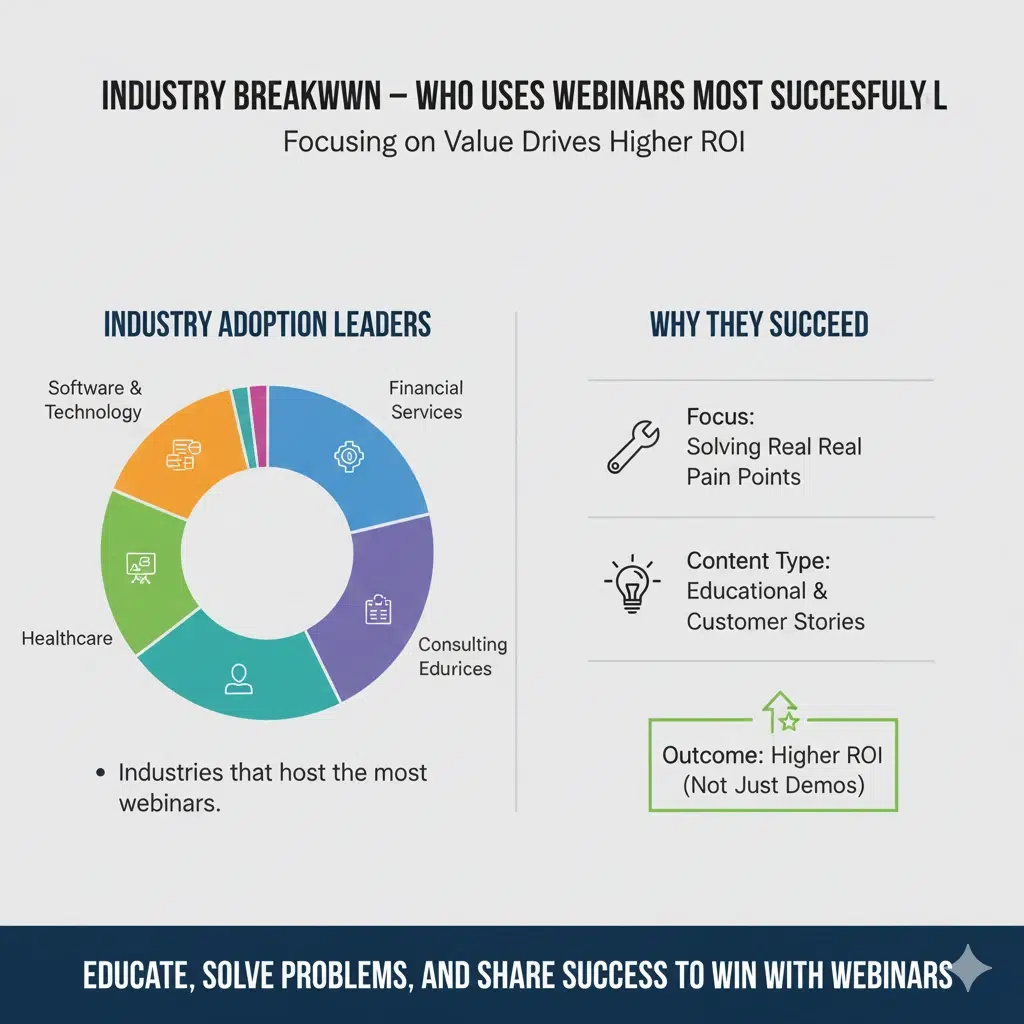
Software and technology companies host 29% of all webinars, followed by financial services at 14% and education at 11%.
These industries succeed because they focus on solving real pain points rather than pitching products. Educational sessions and customer-story webinars deliver 53% higher ROI than traditional product demos.
| Industry Share of Total Webinars 2025 | Percentage |
| Software & Technology | 29% |
| Financial Services | 14% |
| Education | 11% |
| Consulting | 10% |
| Healthcare | 7% |
Cost and ROI – Why Webinars Beat Almost Everything Else
The average webinar costs between $0 (using free plans) and $5,000 when including paid promotion and guest speakers. Return on investment remains spectacular because the cost per lead stays around $72 while lead quality scores “above average” for 68% of organizations. Seventy-five percent of marketers report webinars lowered their overall cost-per-lead compared to other channels.
Latest Trends Straight from Reddit and Quora in 2026
Marketers on Reddit and Quora currently ask three questions constantly:
- “Are webinars still worth doing in 2025 with short-form video everywhere?” The data says yes — webinars generate deeper trust and higher-ticket sales than any 60-second clip.
- “How do I stop people dropping off after 20 minutes?” Top hosts now use on-stage polls, live chat reactions, and countdown timers to Q&A to keep attention above 80%.
- “Should I gate my replay or make it public?” Best practice in 2025 is to gate the replay behind a simple email gate for the first 30–60 days (capturing late leads), then make it public for SEO and evergreen traffic.
FAQs About Webinar Statistics
1. What is the realistic attendance rate I should expect in 2025?
Expect 40-50% attendance, but with optimal timing, reminders, and engaging content, you can hit 60-90%.
2. How many leads can a single webinar generate?
Webinars with 200-500 registrants can generate 100-300 qualified leads, with B2B webinars converting 73% of live attendees.
3. Are longer webinars better in 2025?
90-minute webinars get high attendance, but 60-minute sessions with replays provide great ROI and wider reach.
4. Should I worry about AI replacing live webinars?
No, AI enhances webinars, but 93% are still live due to the human connection needed for trust and conversions.
5. What is the fastest way to double webinar attendance?
Schedule on Wednesdays or Thursdays, use reminders, add guest speakers, and run interactive polls to boost attendance.
Conclusion:
In 2025, webinars continue to be a powerful tool for lead generation and engagement, offering high ROI and cost-effectiveness.
With an average cost per lead of just $72, webinars surpass traditional events in value, providing opportunities for businesses, educators, and marketers to connect with audiences globally.
Key strategies like optimal scheduling, leveraging AI for content creation and follow-ups, and incorporating interactive elements can boost attendance and conversion rates.
As the webinar landscape evolves, staying informed on trends and adopting best practices will ensure success in your virtual events and marketing campaigns.
Source: WebinarNinja, LiveWebinar
