

Android continues to dominate the digital world in 2025. With billions of active devices, it shapes everything from personal communication to business productivity.
Whether you’re a casual user, a developer, or a business owner, understanding Android’s reach and trends is crucial.
This article dives into Android usage statistics for 2025, offering practical insights into user growth, market share, and how you can benefit from this powerful ecosystem.
The Explosive Growth of Android Users
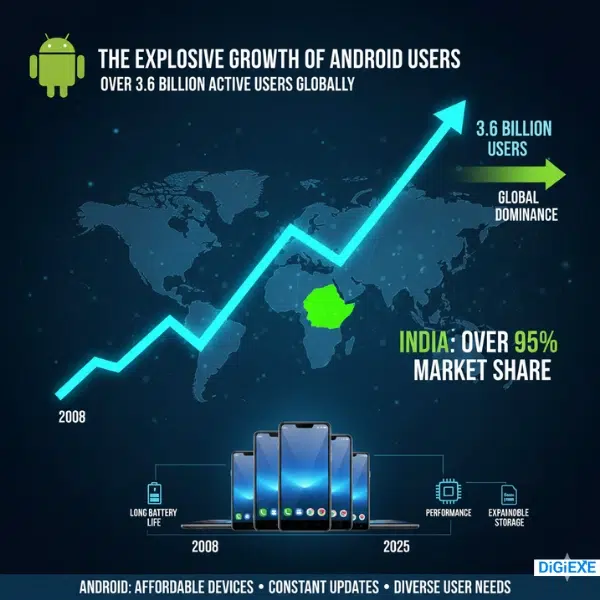
Android has come a long way since its launch in 2008. In just a few years, it went from a small, open-source project to the world’s leading mobile operating system.
In 2025, Android boasts over 3.6 billion active users across 190 countries. This growth has been fueled by affordable devices, consistent updates, and the platform’s ability to meet diverse user needs.
In countries like India, Android dominates, powering over 95% of smartphones.
For users, this means having access to affordable devices without compromising on features like long battery life, expandable storage, and performance.
Here’s a look at Android’s user growth over the years:
| Year | Number of Android Users (in Billions) |
|---|---|
| 2012 | 0.5 |
| 2013 | 0.7 |
| 2014 | 1.0 |
| 2015 | 1.4 |
| 2016 | 1.7 |
| 2017 | 2.0 |
| 2018 | 2.3 |
| 2019 | 2.5 |
| 2020 | 2.8 |
| 2021 | 3.0 |
| 2022 | 3.3 |
| 2023 | 3.5 |
| 2024 | 3.6 |
| 2025 | 3.6+ |
Android’s growth rate remains impressive, with the platform growing at about 20% per year. For users, this means more choices and frequent updates to apps that improve their everyday experience.
Also read about: iPhone Users Statistics
Android’s Global Market Share
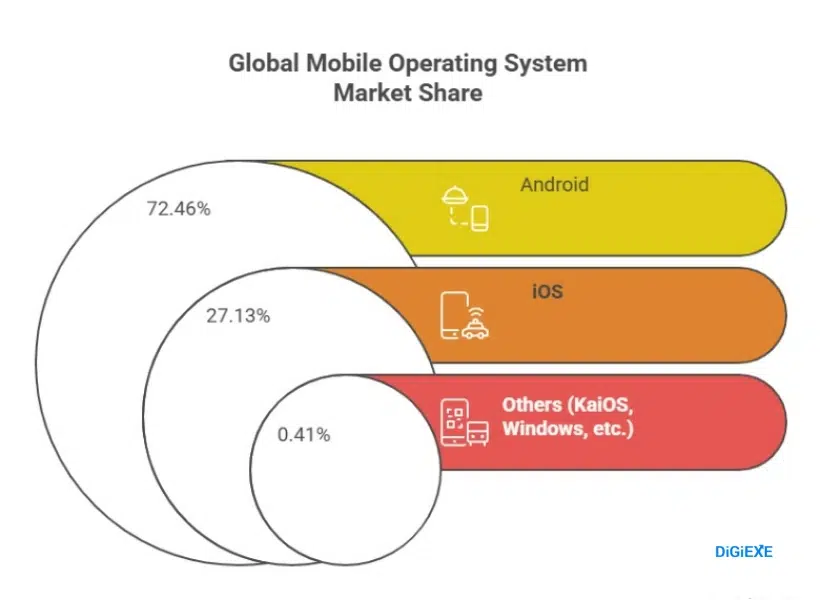
In 2025, Android holds a staggering 72.46% of the global mobile OS market. This dominance is driven by partnerships with manufacturers that create a wide range of affordable devices.
In countries like India, Brazil, and Indonesia, Android’s share surpasses 85%, making it the go-to mobile platform.
This widespread adoption benefits you by offering devices at every price point—whether you need a high-end smartphone or an affordable option for basic tasks.
The result is more access to tools, apps, and services that can improve your work and personal life.
Here’s how Android compares to iOS in terms of global market share:
| Year | Android Market Share | iOS Market Share |
|---|---|---|
| 2017 | 72.63% | 19.65% |
| 2018 | 75.45% | 20.47% |
| 2019 | 75.47% | 22.71% |
| 2020 | 73.06% | 26.28% |
| 2021 | 71.89% | 27.34% |
| 2022 | 71.47% | 27.85% |
| 2023 | 70.26% | 29.02% |
| 2024 | 71.85% | 27.60% |
| 2025 | 72.46% | 27.13% |
While iOS leads in wealthier markets, Android remains the dominant force in developing regions where affordability is key.
This gives you access to a wide range of apps, from social media to productivity tools, all designed to run smoothly on your Android device.
Also read about: Mobile Marketing Statistics
Android’s Growing Presence in the U.S.

In the United States, Android commands 42.51% of the mobile OS market in 2025, trailing iOS, which holds 57.24%. Despite this gap, Android remains a strong contender, especially among younger, budget-conscious users.
The flexibility of Android allows users to customize their devices to suit their needs, whether for work or leisure.
Here’s a snapshot of Android’s market share in the U.S.:
| Year | Android Market Share (US) | iOS Market Share (US) |
|---|---|---|
| 2016 | 45.20% | 53.19% |
| 2017 | 45.23% | 53.89% |
| 2018 | 44.73% | 54.82% |
| 2019 | 44.51% | 55.23% |
| 2020 | 40.27% | 59.54% |
| 2021 | 41.11% | 58.58% |
| 2022 | 42.94% | 56.74% |
| 2023 | 41.46% | 58.10% |
| 2024 | 42.34% | 57.39% |
| 2025 | 42.51% | 57.24% |
In the U.S., Android appeals to a broad audience, including tech-savvy millennials who enjoy customizing their devices with themes, widgets, and launchers. This flexibility makes Android a preferred choice for many users.
Android Device Diversity

Samsung remains the leader in Android devices, with 30.8% of the global market share. Other manufacturers like Xiaomi, Vivo, and Oppo continue to innovate, offering powerful smartphones at various price points.
This diversity allows you to choose a device that fits your lifestyle, whether you’re a photographer, gamer, or just need a reliable phone.
Here’s how Android vendors break down:
| Company | Market Share |
|---|---|
| Samsung | 30.80% |
| Xiaomi | 15.90% |
| Vivo | 11.20% |
| Oppo | 10.00% |
| Realme | 5.00% |
| Others | 28.00% |
This competition fosters innovation, lowering prices and introducing features like 5G and high-refresh-rate screens on affordable devices.
For users, this means you can get cutting-edge technology without paying premium prices.
Android 15: The Game-Changer
Android 15 is the most popular version in 2025, powering 30% of all Android devices.
This version brings exciting features like satellite connectivity and enhanced privacy options, making it a must-have for users who want the latest technology and a more secure mobile experience.
Here’s how Android versions are distributed:
| Android Version | Market Share |
|---|---|
| Android 15 | 30.00% |
| Android 14 | 15.00% |
| Android 13 | 15.00% |
| Older | 40.00% |
With Android 15, you can enjoy better performance, improved security, and new features that enhance everyday use, from battery-saving AI to advanced privacy tools.
The Android App Ecosystem
Android’s app ecosystem continues to thrive in 2025, with over 2.1 million apps available on Google Play.
Popular apps like Instagram, TikTok, and WhatsApp see millions of downloads each year, offering users tools for social connection, entertainment, and productivity.
Here’s a look at the top downloaded apps in 2025:
| App | Downloads (Millions) |
|---|---|
| 584 | |
| TikTok | 446 |
| 411 | |
| 371 |
For developers, Android offers a massive opportunity to monetize apps through ad revenue, subscriptions, and in-app purchases. In 2024, developers earned $47 billion through the Play Store.
FAQs About Adroid Usage Statistics
1. How does Android's global market share in 2025 benefit everyday users like me?
Android’s 72% market share means more affordable devices and apps, tailored for diverse needs, and integration with Google services like Maps and Workspace.
2. What makes Android 15 a must-update for users in 2025?
Android 15 offers features like satellite connectivity, AI-powered battery savings, and enhanced privacy, improving your device’s performance and security.
3. How can businesses leverage Android usage statistics 2025 for growth?
Businesses can target Android’s 3.6 billion users through localized marketing in regions like India, boosting engagement and revenue from tailored e-commerce experiences.
4. Why do online communities like Reddit and Quora focus on Android version support in 2025?
Communities emphasize version support because newer versions reduce fragmentation, ensuring better performance and security while minimizing bugs.
5. In what ways do Android apps contribute to user benefits based on 2025 download trends?
Top apps like Instagram and TikTok offer personalized experiences that foster social connections and creative content, while developers earn revenue from Android’s engaged user base.
Also Read:
- TikTok Users Statistics
- Video Game Industry Statistics
- Facebook Users Statistics
- Google Ads Statistics
- Marketing Automation Statistics
Conclusion: How You Can Benefit from Android in 2025
Android’s vast user base, powerful features, and diverse device options make it a platform that benefits both users and businesses.
As a user, you can leverage the flexibility, affordability, and customization of Android to enhance your daily life. For businesses, targeting Android’s global audience provides unparalleled growth opportunities in emerging markets.
By understanding Android’s trends and statistics, you can make smarter choices, whether you’re upgrading your device, optimizing your apps, or expanding your business reach.
Source: Business of Apps, Statista
