
The metaverse has rapidly expanded in 2025, welcoming an impressive 600 to 700 million monthly active users (MAUs) who immerse themselves in virtual worlds for gaming, socializing, work, and commerce.
This digital universe, driven by platforms such as Roblox, Fortnite, and Horizon Worlds, generates a market value of $103.6 billion, with projections soaring to $507.8 billion by 2030, growing at a compound annual growth rate (CAGR) of 37.43%.
The metaverse offers numerous benefits for its users: gamers can earn through play-to-own NFTs, professionals attend global meetings without traveling, shoppers can try on clothes in virtual fitting rooms, and creators can monetize custom experiences.
Meta’s Reality Labs, a major player in the space, has reported 700 million MAUs across its ecosystem. Roblox leads with 214 million MAUs and 77.7 million DAUs, followed by Fortnite and Minecraft.
Demographics show that a large portion of users is young, with 51% of users under 13 and 83.5% under 18, but adoption is expanding, and work-related applications are increasing.
In fact, 52% of users are expected to utilize the metaverse for work, with 25% predicted to spend an hour daily in the virtual world by 2026.
The market is also seeing significant regional contributions, with the United States contributing $23 billion and China $15.9 billion.
Additionally, AR/VR headset sales have tripled, with 61% of users benefiting from haptic feedback.
Despite concerns, such as data privacy—55% of users worry about privacy risks—there are clear benefits, such as overcoming real-world limitations (39%) and boosting creativity (37%).
Metaverse Growth and User Penetration
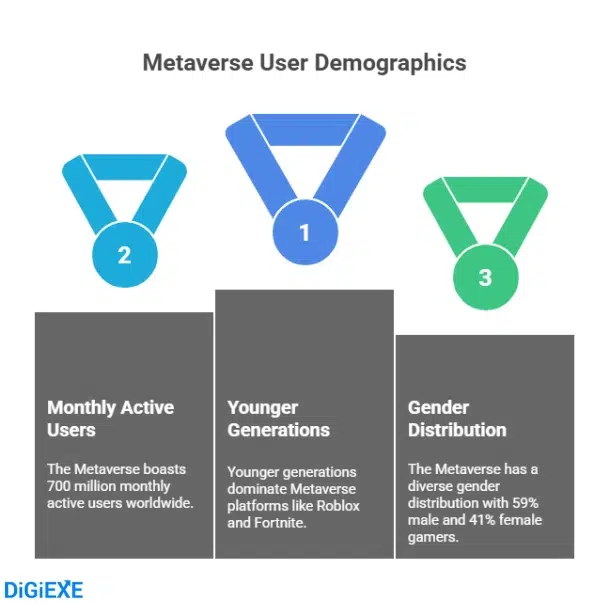
In 2025, the metaverse hosts between 600 million and 700 million MAUs, driven largely by platforms like Roblox (214 million MAUs), Fortnite (236 million MAUs), and Minecraft (166 million MAUs).
Meta reports 700 million MAUs across its apps. This growth marks a significant increase in user penetration, reaching 17.4% in 2025, up from 14.6% in 2024.
Projections indicate that by 2030, the number of metaverse users could reach anywhere from 2.63 to 5 billion, including those using mobile augmented reality (AR).
The average revenue per user (ARPU) is expected to be $92, showcasing the economic potential of the metaverse as it continues to scale.
The increasing number of daily active users (DAUs) also indicates a shift from purely gaming to more diverse uses of the metaverse.
For instance, 60% of users utilize the metaverse for non-gaming activities, including work (52%), entertainment (48%), and socializing (32%).
This reflects how the metaverse is becoming an integral part of everyday life, offering a platform for creative building, networking, and business transactions.
Also read about: Instagram Statistics
Market Valuation and Regional Contributions
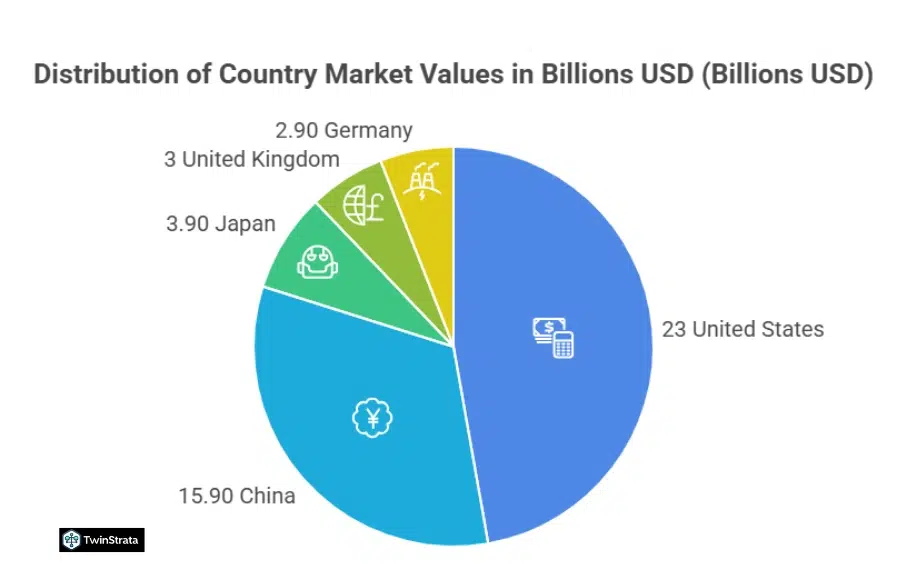
The metaverse market is valued at $103.6 billion in 2025, up from $74.4 billion in 2024.
Projections suggest that this market could grow significantly, reaching $507.8 billion by 2030.
The United States is currently the leading contributor, generating $23 billion in metaverse-related economic activity, followed by China with $15.9 billion.
Other countries contributing to the market include Japan ($3.9 billion), the United Kingdom ($3.0 billion), and Germany ($2.9 billion).
The rapid growth of the metaverse has spurred investment, especially in virtual real estate.
Virtual parcels in high-traffic areas, such as Decentraland, have sold for millions of dollars, offering opportunities for businesses to establish stores without physical inventory costs.
Virtual commerce is expected to thrive as businesses continue to embrace the metaverse as a space for customer engagement, product launches, and brand-building.
Source: Statista.
Demographics: Young but Expanding
While the metaverse is predominantly driven by younger users, there is a clear shift toward more diverse demographics. In 2025, 51% of metaverse users are under the age of 13, and 83.5% are under the age of 18.
This reflects the platform’s appeal to younger generations, with 38% of gamers between the ages of 10-20 and 36% between the ages of 21-35.
However, there is also a growing trend of adult users, particularly those interested in work-related applications, socializing, and education.
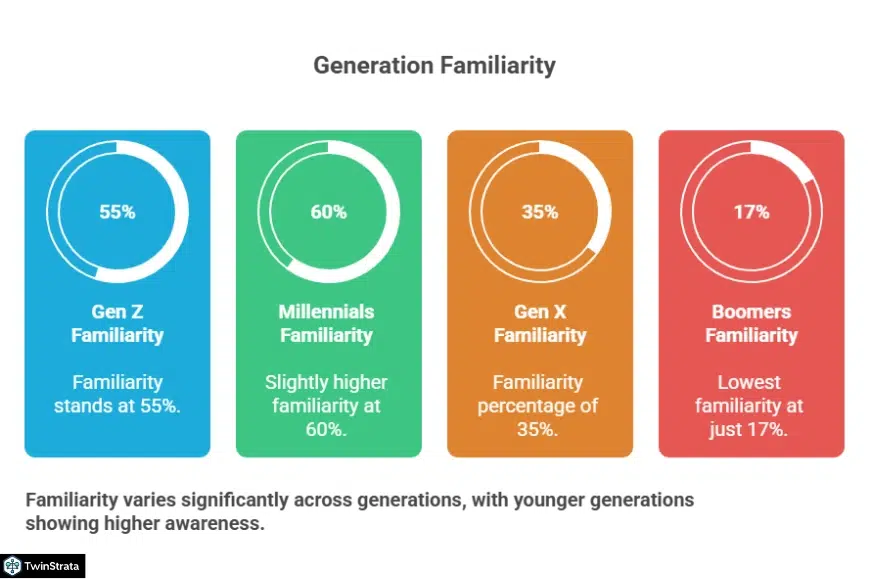
Gender demographics show a male-dominated audience, with 59% male and 41% female users. Familiarity with the metaverse also varies by generation, with 55% of Gen Z users, 60% of Millennials, 35% of Gen X, and just 17% of Boomers reporting familiarity with virtual worlds.
This age-based skew influences the types of content being created within the metaverse. Creators are increasingly developing family-friendly games and experiences, particularly on platforms like Roblox, where younger audiences are active.
Given the massive daily engagement on these platforms—77.7 million DAUs on Roblox—creators have significant opportunities to monetize their creations and gain widespread attention.
Also read about: YouTube Revenue And Usage Statistics
Adoption Rates and Daily Engagement
As the metaverse continues to expand, daily engagement is set to grow. By 2026, projections suggest that 25% of users will spend at least one hour per day in the metaverse.
This could be for work, education, or entertainment, reflecting a broader trend toward virtual environments as essential components of daily life.
Interestingly, 74% of US adults are considering or already engaging with the metaverse, with 30% of companies preparing to integrate metaverse-based products and services.
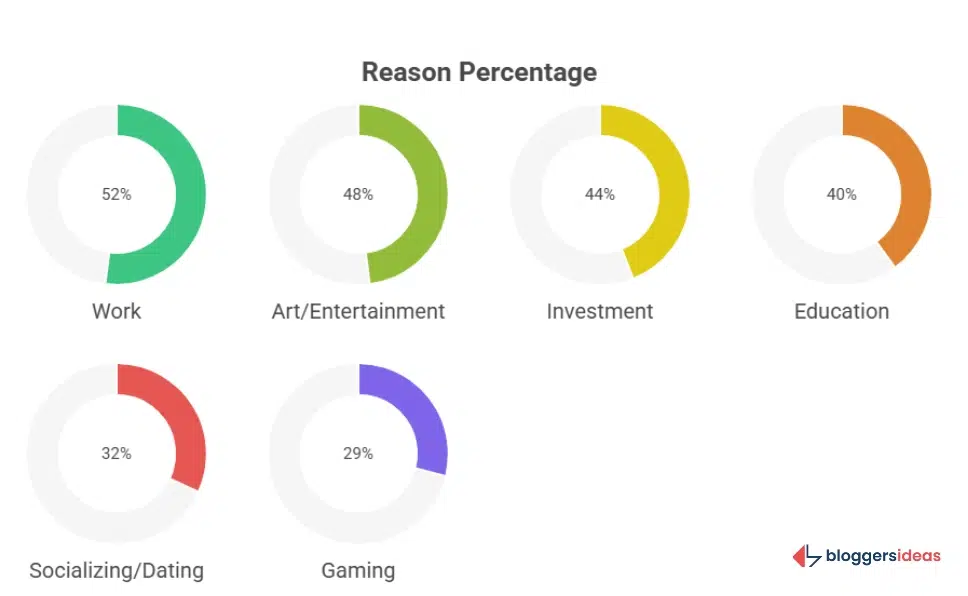
The reasons for joining the metaverse are varied, with 52% of users citing work-related purposes, 48% interested in art and entertainment, 44% investing in virtual assets, 40% looking for educational opportunities, and 32% seeking social or dating experiences.
This diverse range of motivations demonstrates the wide appeal of the metaverse beyond gaming alone.
Adoption is particularly high in regions like Asia, the Middle East and North Africa (MENA), and Europe, where access to devices is more widespread.
For instance, South Korea has invested $48.3 million in metaverse startups, and Dubai aims to become one of the top 10 global economies by leveraging virtual technologies.
Metaverse Beyond Gaming: Industry Applications
While the gaming industry remains a major driver of the metaverse’s market value—estimated at $31.6 billion in 2025, with projections reaching $119.2 billion by 2028—other industries are also experiencing significant growth.
Virtual fitting rooms are expected to reach $6.86 billion in 2025, with a CAGR of 19.8%, growing to $24.3 billion by 2032. These virtual shopping experiences are already helping e-commerce brands reduce returns by up to 30%.
The mobile augmented reality (AR) market is also poised for substantial growth, reaching $357.9 billion by 2032.
Virtual events, such as Blackpink’s concert in the metaverse, have drawn millions of attendees, underscoring the metaverse’s potential as a venue for live performances, product launches, and interactive experiences.
Businesses are increasingly adopting virtual platforms for remote work, with significant productivity gains reported in sectors such as virtual training. For example, Accenture has reported a 35% increase in productivity from virtual training programs.
Public Opinion and Concerns
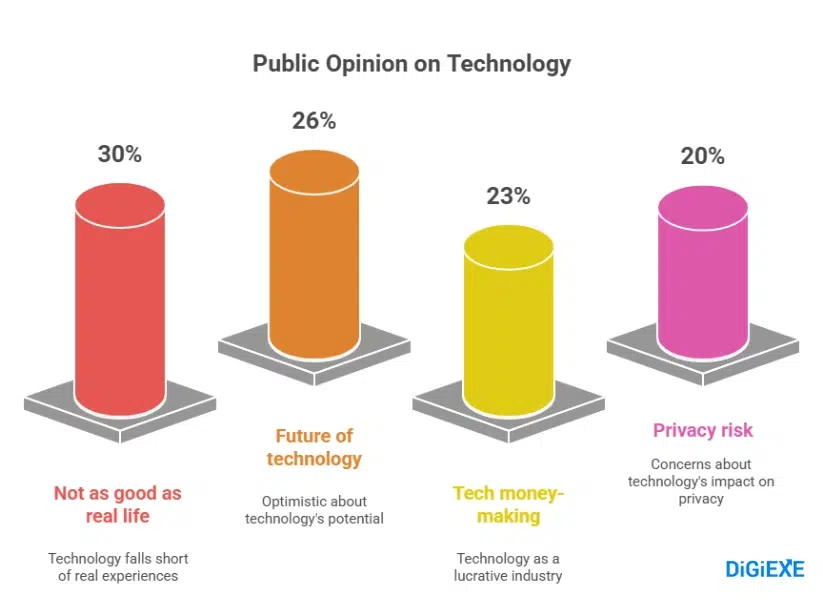
Despite the metaverse’s rapid growth and widespread adoption, there are concerns about the technology’s future. 26% of users view the metaverse as the future of technology, while 30% believe it is not as good as real life.
Some people remain skeptical about the long-term impact of the metaverse, with 23% seeing it as a money-making opportunity for tech companies, and 20% worried about privacy risks.
Concerns over data privacy are particularly prominent, with 55% of users expressing concerns about potential misuse of personal data.
Despite these concerns, there are significant benefits associated with the metaverse, such as overcoming real-world limitations (39%) and enhancing creativity (37%).
As the metaverse continues to evolve, privacy concerns are being addressed through new technologies like biometric masking, which can reduce identity theft by up to 40%.
Meta’s Role in the Metaverse
Meta, the parent company of Facebook, is a major player in the metaverse, with its Reality Labs division generating $2.1 billion in revenue in 2024.
However, the company is still operating at a loss, with a reported $17.7 billion loss in the same year. Nevertheless, Meta controls a dominant share of the virtual reality (VR) market, with 73% of the market share in 2024.
The company is heavily investing in the metaverse, with a projected $60-65 billion capex in 2025, aimed at further developing AI and VR technologies.
Emerging Trends and Investment Opportunities
Several emerging trends are expected to shape the metaverse in 2025 and beyond.
On Reddit and Quora, users are discussing the potential for high-return opportunities in metaverse real estate, with investors noting a 200% return on investment in prime parcels within platforms like the Sandbox.
Additionally, AI avatars are gaining attention, with biometric privacy features being tested to help mitigate identity theft risks.
These trends suggest that virtual land investments, AI-powered avatars, and immersive technologies like haptic feedback will be key areas for investors to watch in the coming years.
FAQs About Metaverse Statistics
1. Is the metaverse only for gamers?
No. While gaming was the initial driver, the metaverse now includes sectors such as finance, healthcare, education, shopping, real estate, and business meetings. It’s a versatile platform for many industries.
2. Do I need an expensive VR headset to experience the metaverse?
Not necessarily. While VR headsets offer the most immersive experience, you can also access the metaverse through mobile AR apps, tablets, and PCs. These are more affordable and still provide a great way to explore.
3. Can I make real money in the metaverse?
Yes. Many users earn real money through various methods, including selling digital goods, hosting events, creating virtual real estate, or trading NFTs (Non-Fungible Tokens).
4. Is the metaverse safe for kids?
Safety is a concern, especially with issues like harassment and screen time. Platforms are implementing age filters, parental controls, and anti-harassment tools to improve safety for younger users. It’s important for parents to monitor their children’s use.
5. How is the metaverse used in education?
The metaverse is transforming education with immersive, interactive learning experiences. Universities are using VR and other metaverse technologies to teach subjects like medicine, engineering, and design, offering more engaging alternatives to traditional classrooms.
Also Read:
- Social Media Statistics
- Twitch Statistics
- Google Searches Statistics
- LinkedIn Statistics
- YouTube Creator Statistics
Conclusion: Embrace the Metaverse for Digital Empowerment
Metaverse statistics for 2025 highlight a rapidly growing digital ecosystem, with 600 to 700 million users and a market value of $103.6 billion.
The market is expected to continue expanding, reaching $507.8 billion by 2030.
As adoption grows and new technologies emerge, the metaverse will become increasingly integral to work, play, and commerce.
Individuals and businesses alike can capitalize on the opportunities in this boundaryless digital space by creating engaging content, investing in virtual real estate, and exploring new ways to interact with customers and clients in the metaverse.
Source: Fortune Business insights.
