
Gmail is an essential tool for personal and business communication, and in 2025, it continues to lead the way in email efficiency and productivity.
With over 2.5 billion active users, Gmail handles 30% of global email traffic, making it a critical platform for managing messages, collaborating with teams, and even marketing your business.
In this article, we’ll explore Gmail statistics for 2025 and offer practical tips to help you streamline your email habits and boost productivity.
Whether you’re a freelancer, a business owner, or just looking to manage your inbox better, these insights will help you use Gmail more effectively.
The Growing User Base of Gmail
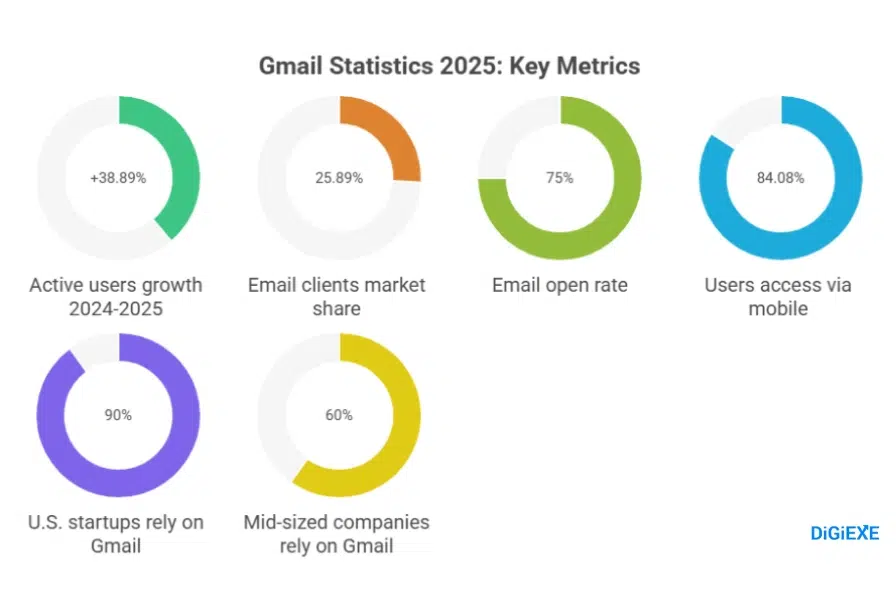
In 2025, Gmail boasts over 2.5 billion active users worldwide.
From its humble beginnings in 2004, Gmail has grown to dominate the email market, thanks to its user-friendly interface, integration with Google’s ecosystem, and consistent innovation.
Gmail’s daily active users (DAUs) number around 1.8 billion, with 66.64 billion monthly visits to the platform. This global reach allows businesses and individuals to stay connected effortlessly.
Since 2016, Gmail has consistently expanded its user base, with significant growth in emerging markets.
By 2025, daily active users have surged, and businesses are increasingly relying on Gmail for communication and collaboration.
In fact, 90% of U.S. startups use Gmail to streamline operations and communication within teams.
The platform also allows users to create up to 30 aliases per account, helping manage multiple work or personal profiles without cluttering the main inbox.
Also read about: Email Marketing Statistics
User Growth Over the Years
Gmail’s user base has grown steadily over the years. In 2012, there were just 425 million active users. By 2025, this number has grown to over 2.5 billion, with a compound annual growth rate of about 15%.
This growth shows Gmail’s ability to keep users engaged and attract new ones, thanks to constant updates and features that enhance the user experience.
| Year | Active Users (Billions) |
| 2012 | 0.425 |
| 2013 | 0.600 |
| 2014 | 0.750 |
| 2015 | 0.900 |
| 2016 | 1.000 |
| 2025 | 2.500 |
Demographics and Personalization
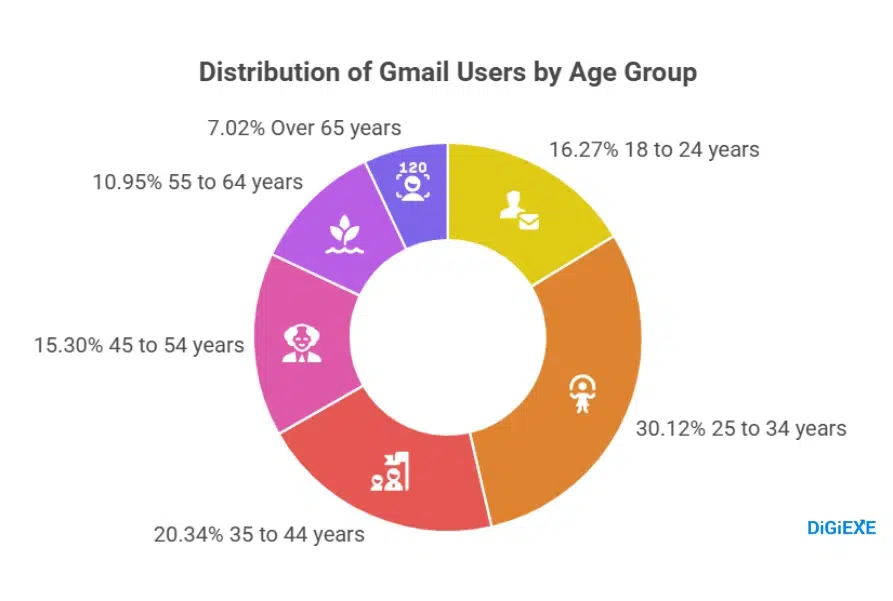
Gmail appeals to a wide demographic, with millennials and Gen Z making up the largest groups of users. In 2025, 30.12% of Gmail users are between the ages of 25 and 34, making them the largest age group.
The platform is used by a near-even split of males (53.05%) and females (46.95%). This diverse audience means Gmail can cater to various communication needs—from quick replies and emoji responses to long-form professional emails.
Age plays an important role in how users interact with Gmail. For instance, the 18-to-24 age group (16.27%) prefers using AI-powered summaries to skim long threads, while older users (55 and above) appreciate larger fonts for easier reading.
This allows businesses to tailor their email strategies to specific demographics, ensuring higher engagement.
| Age Group | Share of Gmail Users |
| 18 to 24 | 16.27% |
| 25 to 34 | 30.12% |
| 35 to 44 | 20.34% |
| 45 to 54 | 15.30% |
| 55 to 64 | 10.95% |
| Over 65 | 7.02% |
Also read about: Email Copywriting Tips for Attracting Customer
Gmail’s Market Share in 2025
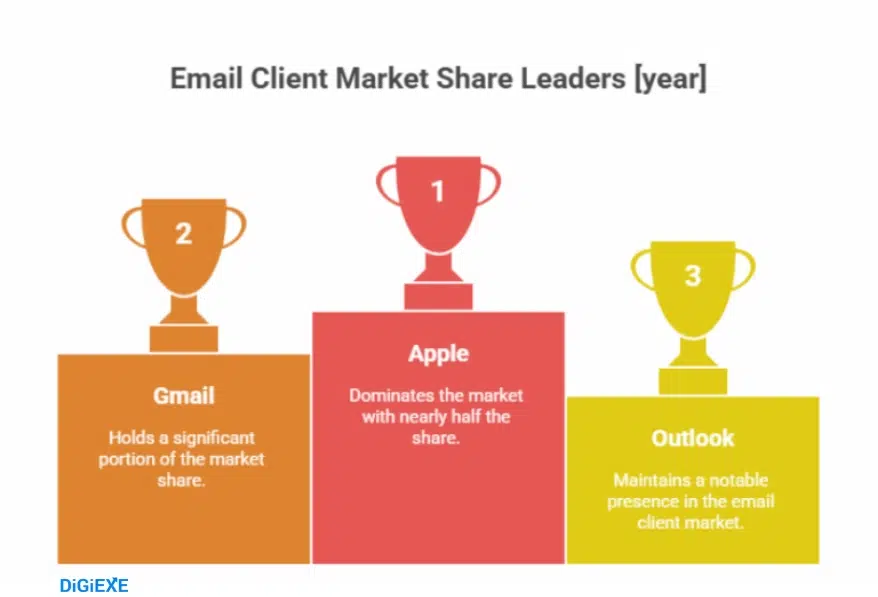
In 2025, Gmail holds 25.89% of the global email client market, significantly ahead of Outlook and Yahoo Mail.
This dominance can be attributed to Gmail’s seamless integration with Google’s suite of apps, making it easier for users to access calendars, docs, and other services directly from their inbox.
| Email Client | Market Share |
| Apple | 49.42% |
| Gmail | 25.89% |
| Outlook | 3.63% |
| Yahoo Mail | 2.20% |
Gmail’s open API allows third-party apps to integrate, creating a cohesive digital environment that keeps users loyal to the platform.
Businesses can take advantage of this by integrating Gmail with automation tools like Zapier to streamline their workflows.
Also read about: Personalization Statistics
Time Spent on Gmail: Daily Habits
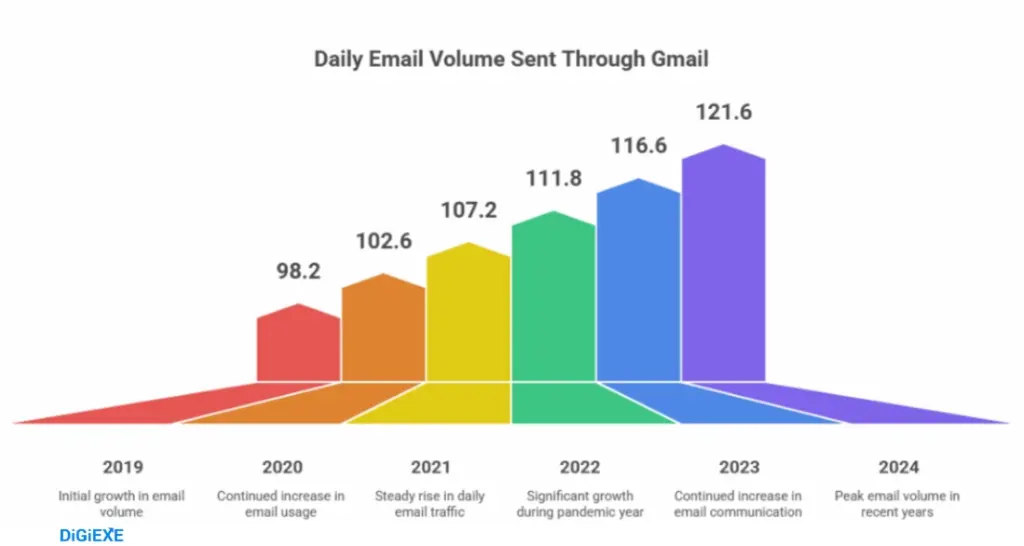
In 2025, Gmail users send over 121 billion emails daily, accounting for 30% of global email traffic. On average, each worker spends 28 minutes managing their inbox.
By organizing your Gmail with filters and labels, you can save time by automatically sorting incoming messages, prioritizing work emails over newsletters.
| Year | Emails Sent Daily (Billions) |
| 2017 | 98.2 |
| 2018 | 102.6 |
| 2019 | 107.2 |
| 2020 | 111.8 |
| 2021 | 116.6 |
| 2025 | 121+ |
Geographic Usage and Device Preferences
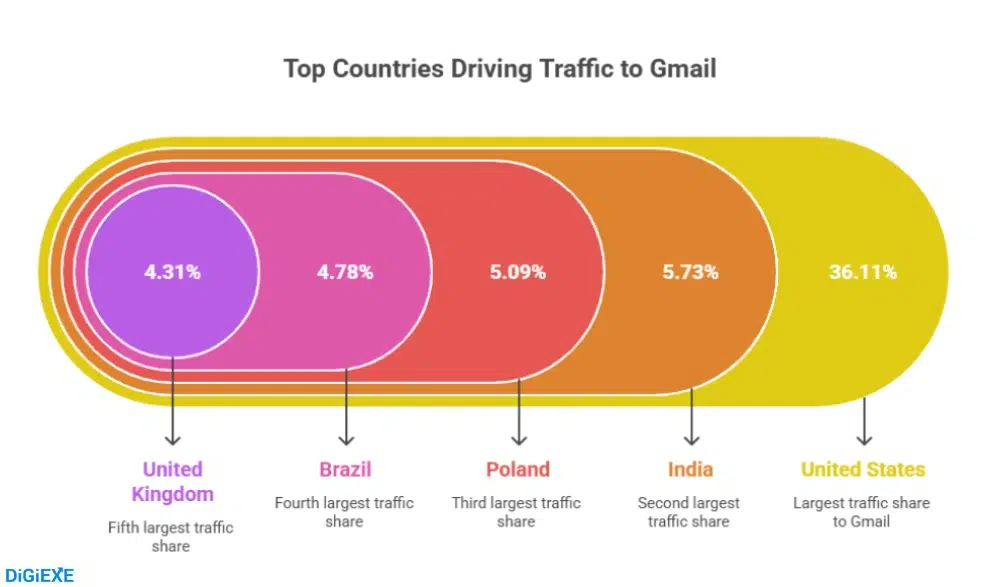
In 2025, Gmail continues to dominate in the United States, driving 36.11% of traffic. India follows with 5.73%, reflecting the growing mobile-first culture in the region.
Gmail is increasingly accessed on mobile devices, with 84.08% of users checking their email from smartphones.
The mobile-first approach helps users stay connected wherever they are, making Gmail an essential app for on-the-go communication.
| Country | Share of Traffic |
| United States | 36.11% |
| India | 5.73% |
| Poland | 5.09% |
| Brazil | 4.78% |
| United Kingdom | 4.31% |
Email Open Rates and Engagement
One of Gmail’s strongest features is its high open rate, which stands at 75%.
This means that Gmail users are more likely to engage with emails, especially when compared to other platforms like Yahoo Mail (14.8%) or Outlook (2.4%).
For marketers, this means that campaigns sent through Gmail have a much higher chance of reaching their intended audience.
| Email Platform | Open Rate (%) |
| Gmail | 75% |
| Yahoo Mail | 14.8% |
| Outlook | 2.4% |
Gmail’s AI-Powered Features
Gmail is also leading the way in integrating AI features. By 2025, 70% of users are making use of Smart Compose and Smart Reply, which allow you to draft emails faster and with less effort.
These AI features save users up to 50% of the time it would typically take to compose a professional email.
Gmail Security: A Focus on Protection
Gmail blocks 99.99% of spam emails, protecting users from phishing attempts.
The platform also helps users secure their accounts with two-factor authentication (2FA) and AI-powered detection of suspicious activity, ensuring a safer email experience.
FAQs About Gmail Statistics
1. How can I manage my Gmail inbox better in 2025?
Use Gmail’s AI-powered features, like Smart Compose and Smart Reply, to save time and increase productivity. Create labels and filters to sort emails automatically.
2. What are the benefits for businesses using Gmail in 2025?
Businesses benefit from Gmail’s high open rates (75%) and its integration with Google Workspace, making it easier to collaborate, streamline workflows, and manage communications.
3. How does Gmail’s market share in 2025 compare to other platforms?
Gmail holds 25.89% of the global email client market, significantly outpacing rivals like Outlook and Yahoo Mail, which highlights its dominance in both personal and business communication.
4. How can I increase email engagement using Gmail?
Focus on personalizing emails using AI-driven tools, segment your email lists, and test subject lines to boost open rates. Using Gmail’s labeling and filtering options helps prioritize important emails.
5. How secure is Gmail in 2025?
Gmail’s advanced spam filters block 99.99% of spam emails, and its two-factor authentication (2FA) provides an added layer of security, making it a safe platform for both personal and business use.
Also Read:
- TikTok Users Statistics
- Facebook Users Statistics
- Mobile Marketing Statistics
- Marketing Automation Statistics
- Google Ads Statistics
Conclusion
Gmail’s incredible growth and constant innovation in 2025 make it the perfect tool for both personal and professional communication.
From AI-driven features that save time to security tools that protect your inbox, Gmail is more powerful than ever.
Whether you’re an individual looking to organize your inbox or a business striving to enhance communication and engagement, these Gmail statistics and insights will help you unlock the full potential of the platform.
Source: The Tech Report, Economic Times
