

The Number That Keeps Coming Up
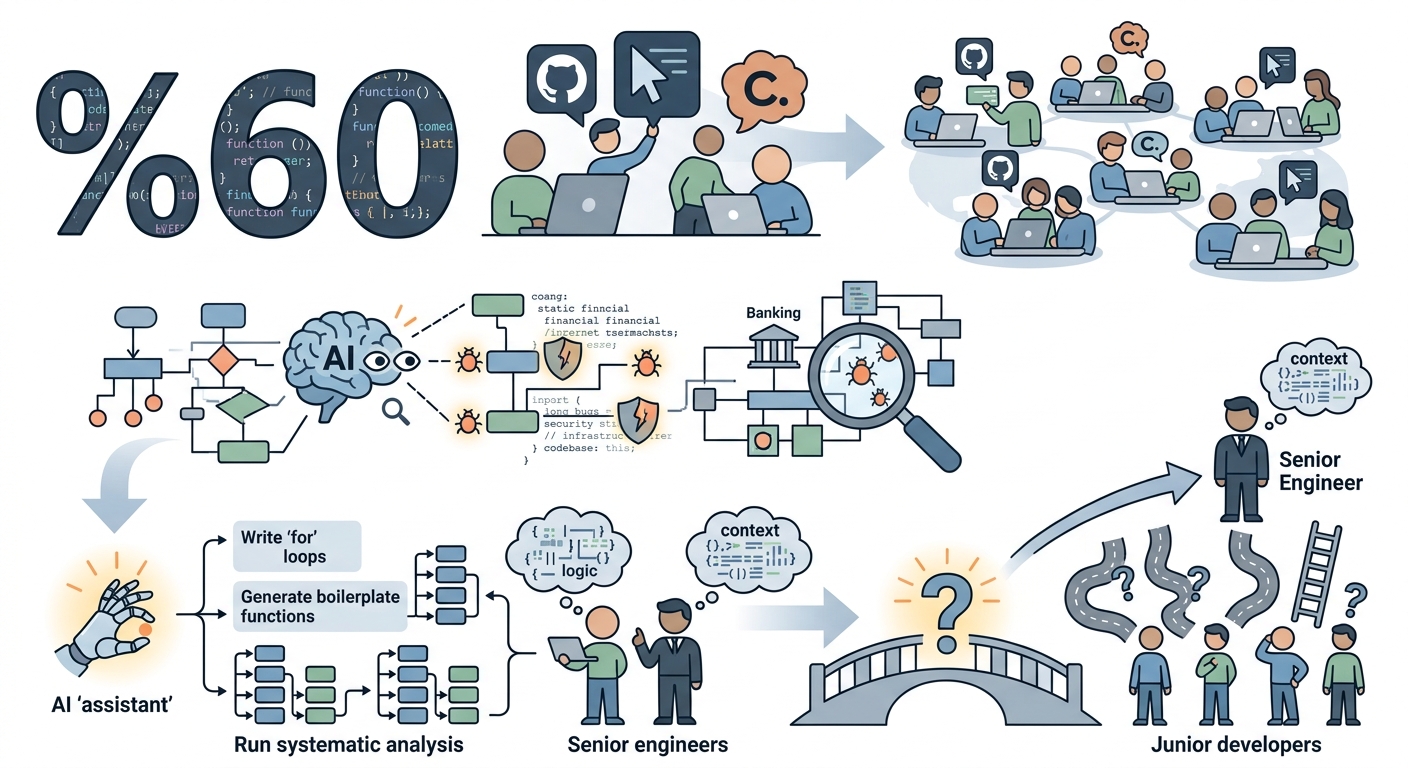
Airbnb’s disclosure that AI now writes 60% of its new code is the most-cited data point in discussions about AI and software engineering right now, and for good reason. It is not a projection or a prediction — it is a current operational reality at one of the world’s most prominent technology companies.
And it is not an isolated case. Similar figures are being reported across enterprise software development teams globally as Copilot, Cursor, and Claude Code become standard tools in engineering workflows.
AI is no longer just generating content — it is becoming a system auditor at a scale humans never achieved. AI has been uncovering decades-old bugs in financial systems and exposing potential vulnerabilities in banking and infrastructure that were never detected before.
The implication for engineering teams is not simply that AI writes some of the code. It is that AI is now doing the kind of work — systematic code analysis, pattern recognition across large codebases, vulnerability identification — that previously required senior engineers with years of accumulated context.
The question this raises about junior developers is legitimate and uncomfortable: if AI handles the mechanical coding work and the systematic review work, what is the learning path that produces the senior engineers of the future?
What Is Actually Getting Automated Versus What Is Not
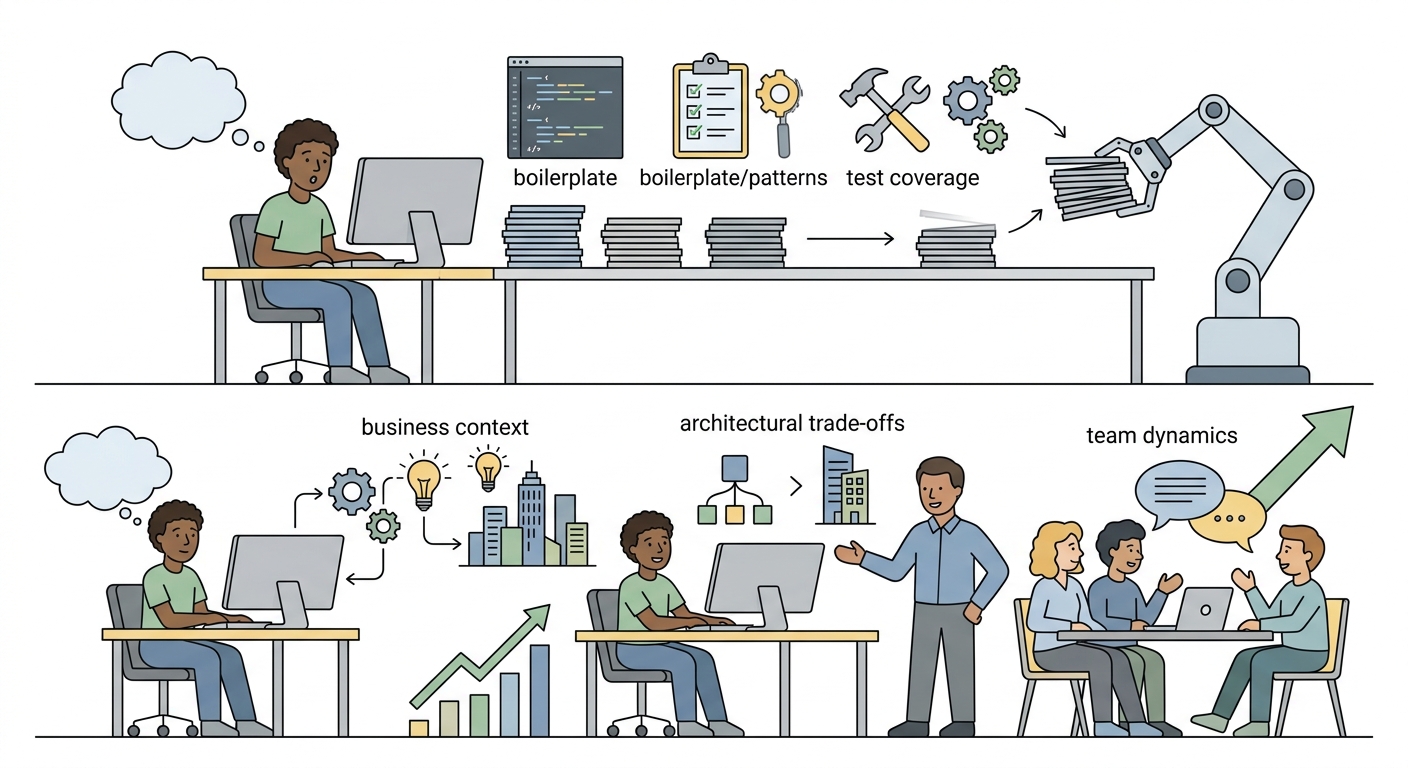
The honest answer is that AI is automating the tasks that are most teachable and most repetitive. Writing boilerplate, implementing well-understood patterns, fixing straightforward bugs, and generating test coverage for existing functions — these are the tasks consuming the most junior developer hours and they are the ones most effectively handled by AI coding tools.
The tasks AI cannot yet reliably handle are the ones that require understanding business context, making architectural trade-offs, managing team dynamics, and making judgment calls with incomplete information.
Geoffrey Hinton noted that AI’s progression means it can do in minutes what used to take an hour on a coding project, and in a few years AI will be able to perform software engineering tasks that now need a month’s worth of labour.
The timeline is aggressive and contested, but the directional trend is clear. The question for engineering managers right now is: what deliberate learning experiences are we creating for junior engineers when AI handles the mechanical work that previously taught them?
The Opportunity in the Gap
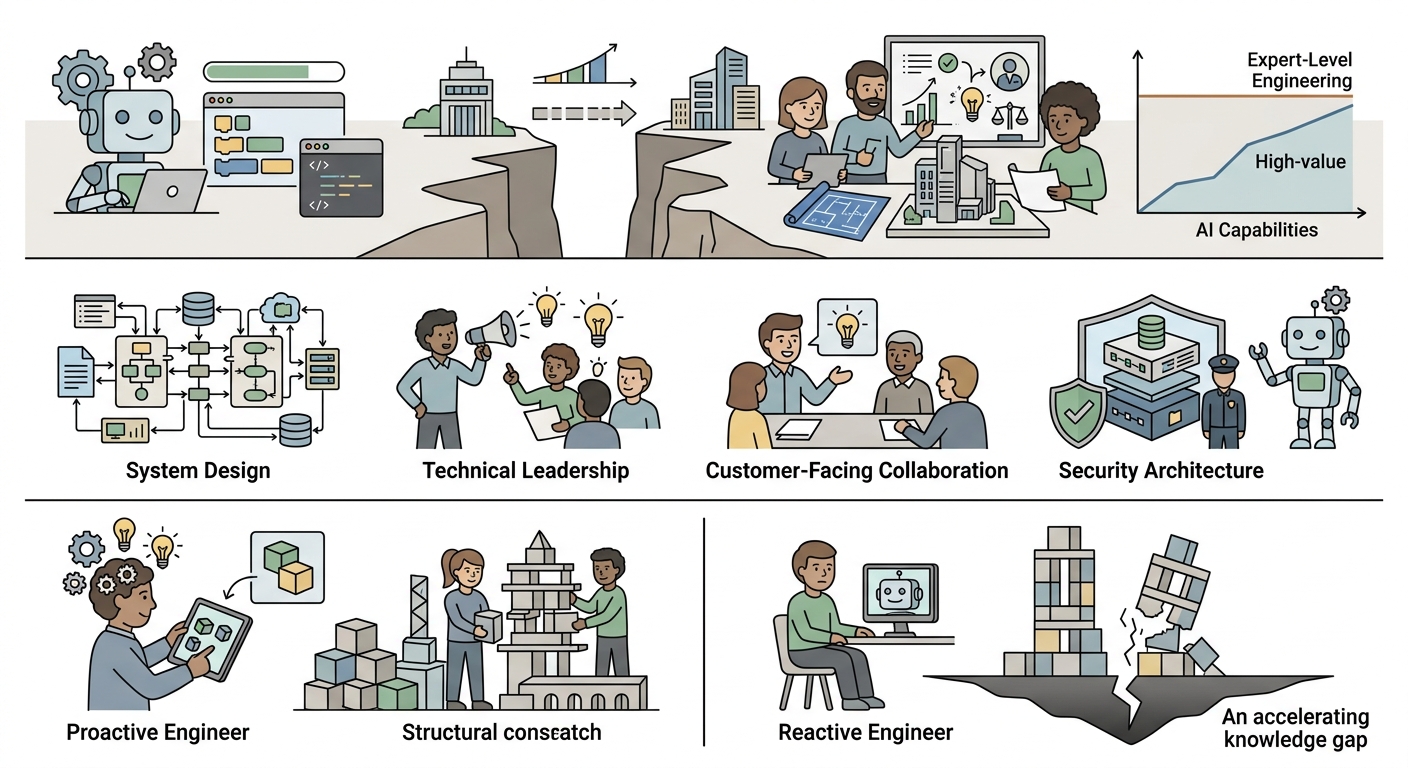
The gap between what AI can do in software engineering and what experienced engineers do is not closing as fast as headlines suggest for the highest-value parts of the role. System design, technical leadership, customer-facing engineering collaboration, and security architecture are all areas where AI augments rather than replaces experienced judgment.
The engineers building their skills in these areas while using AI tools to handle the mechanical work are in a strong position. The engineers using AI tools as a substitute for learning the mechanical work are building a knowledge gap that will eventually matter.
💬 Reddit — r/cscareerquestions on AI and junior developer job market: 🔗https://www.reddit.com/r/cscareerquestions/search/?q=AI+junior+developer+jobs+future+2026
🐦 X/Twitter — engineers debating Airbnb 60% AI code stat implications: 🔗 https://x.com/search?q=Airbnb+60+percent+AI+code+junior+developer&f=live
💬 Quora — will AI replace junior software developers in 2026: 🔗https://www.quora.com/search?q=AI+replace+junior+software+developers+2026
Quick Links:
