

What Happened Within 48 Hours of Launch
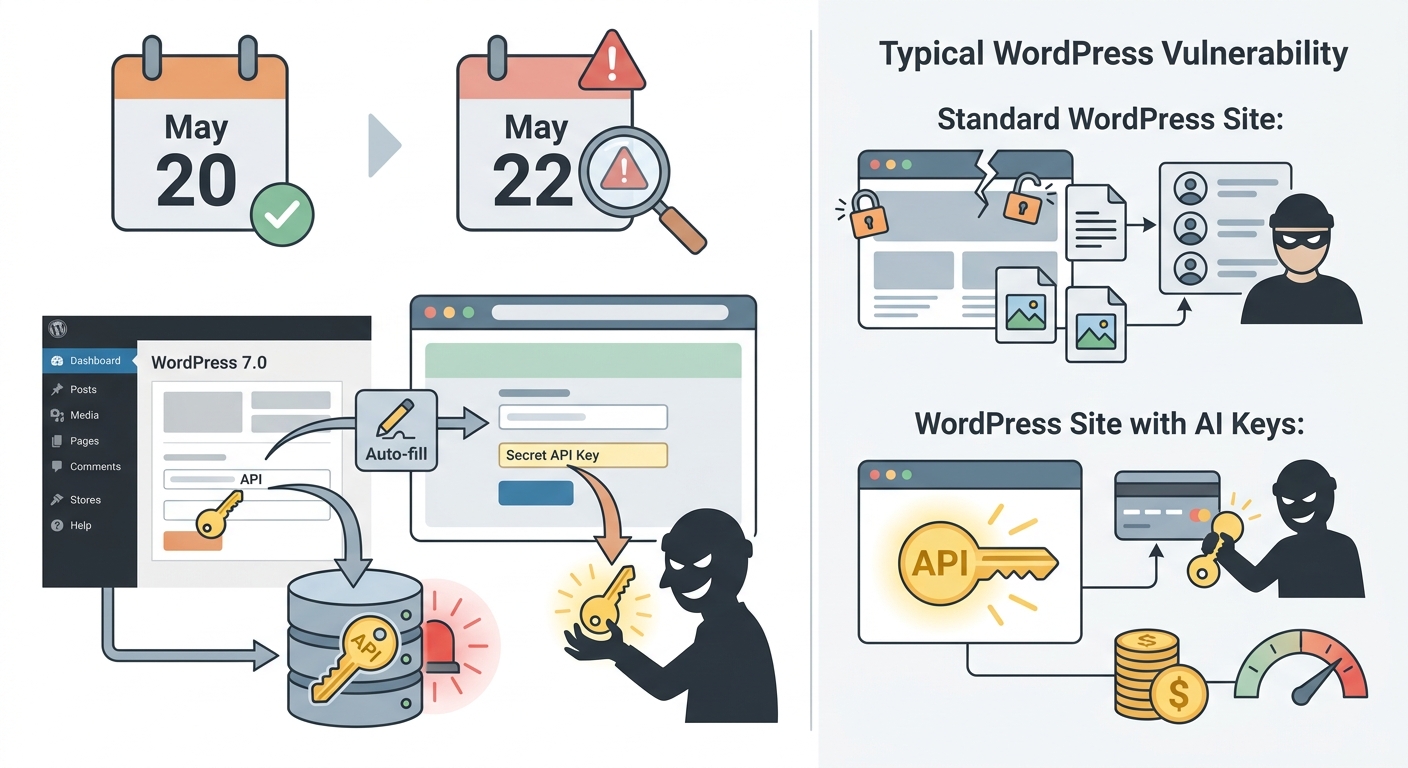
WordPress 7.0 launched on May 20 and within two days a security researcher had identified a vulnerability that has the WordPress security community genuinely alarmed.
The problem is not a minor bug. It is a structural risk that affects every WordPress site that has connected an AI service — and the financial stakes involved are much higher than a typical WordPress vulnerability.
WordPress 7.0 introduced AI infrastructure that stores API credentials in the WordPress database.
A live vulnerability on launch day showed those keys can be exposed through client-side browser autofill on the AI integration setup form. A security researcher warned there will be an absolute rush by hackers to steal these API keys.
Here is why this is different from a typical WordPress vulnerability. When a hacker breaks into a standard WordPress site, they get access to your content, potentially your user data, and your server resources.
When a hacker breaks into a WordPress site that has AI API keys stored in its database, they get something much more valuable — a direct line to a metered financial account.
What an AI API Key Is Actually Worth
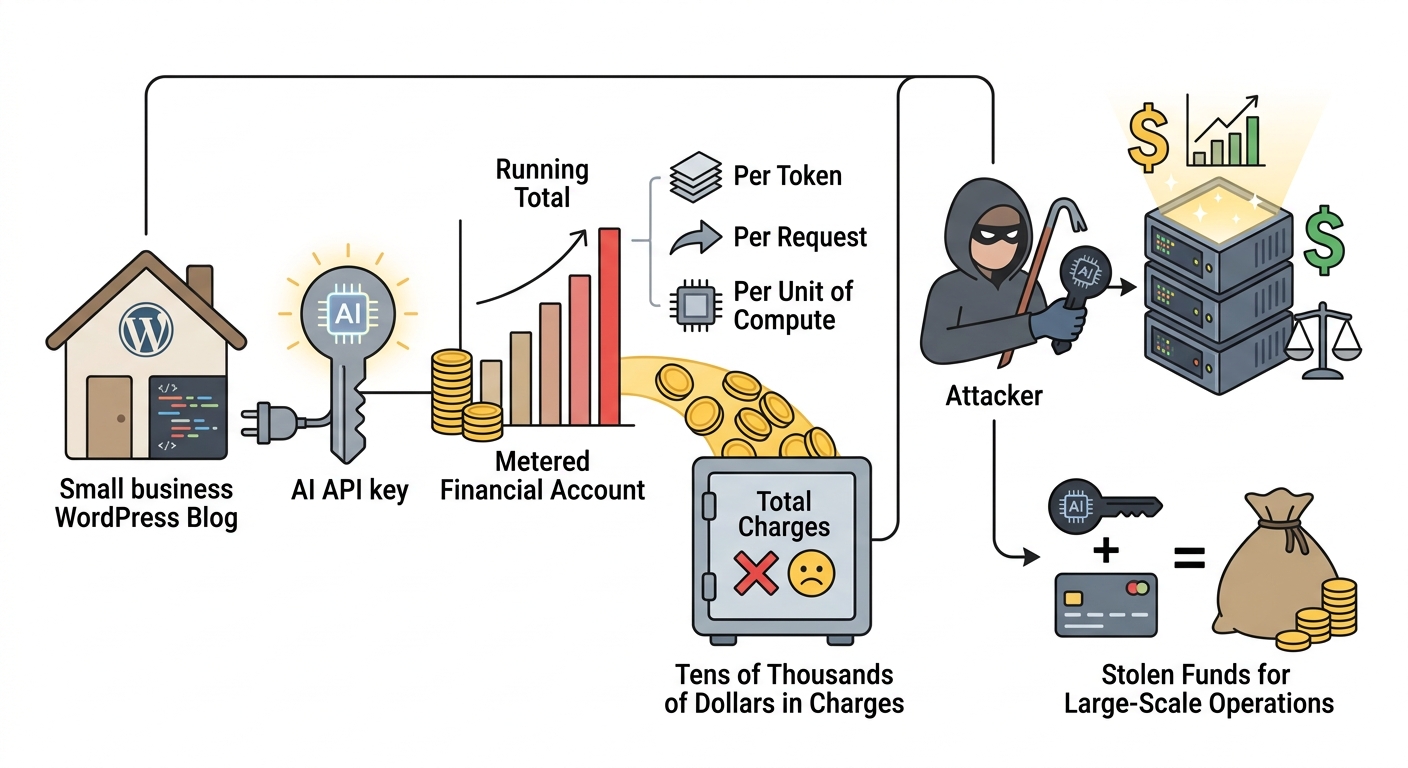
An AI API key is not just a login credential — it is a direct line to a metered financial account. API access is billed by usage, charged per token, per request, or per unit of compute. A single high-usage AI API account can accumulate tens of thousands of dollars in charges.
For attackers, a stolen AI API key is effectively a stolen credit card but one that can be used to power large-scale operations that are themselves profitable.
A small business WordPress blog that previously held no data of financial value to attackers becomes a high-value target the moment it connects an OpenAI, Anthropic, or Google Gemini API key. The website content might be worthless to a criminal. The AI credential sitting in its database is not.
The Scale of the Exposure
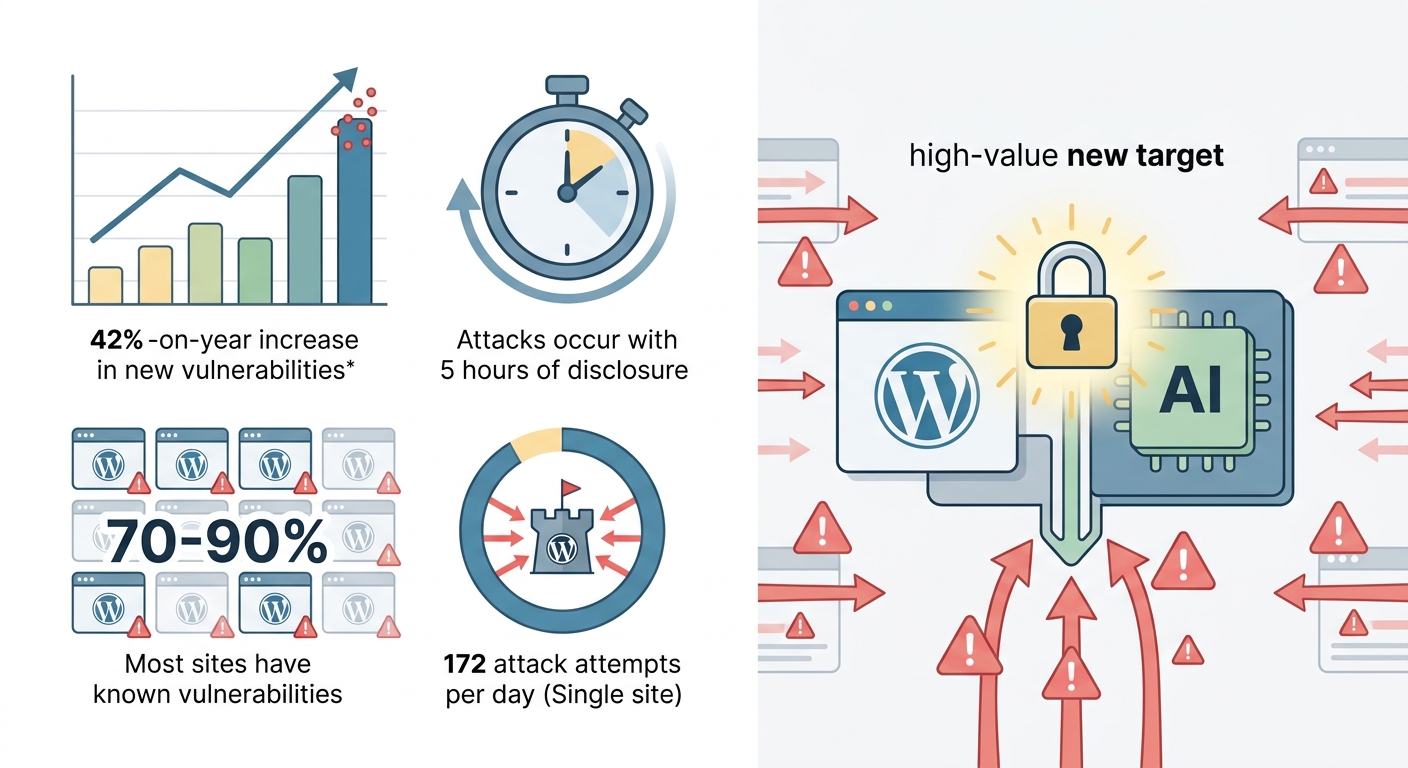
The Patchstack 2026 State of WordPress Security report found 11,334 new vulnerabilities in the WordPress ecosystem in 2025 — a 42% increase year-on-year. Attackers typically exploit new vulnerabilities within five hours of disclosure.
The company’s proof-of-concept scans for hosting providers consistently found 70 to 90% of sites have at least one known vulnerability. The average WordPress site faces 172 attack attempts per day in 2026.
Those background threat statistics make the AI API key vulnerability significantly more dangerous. It is not a theoretical risk being introduced into a secure environment. It is a high-value new target being introduced into an environment already under constant attack.
What to Do Right Now
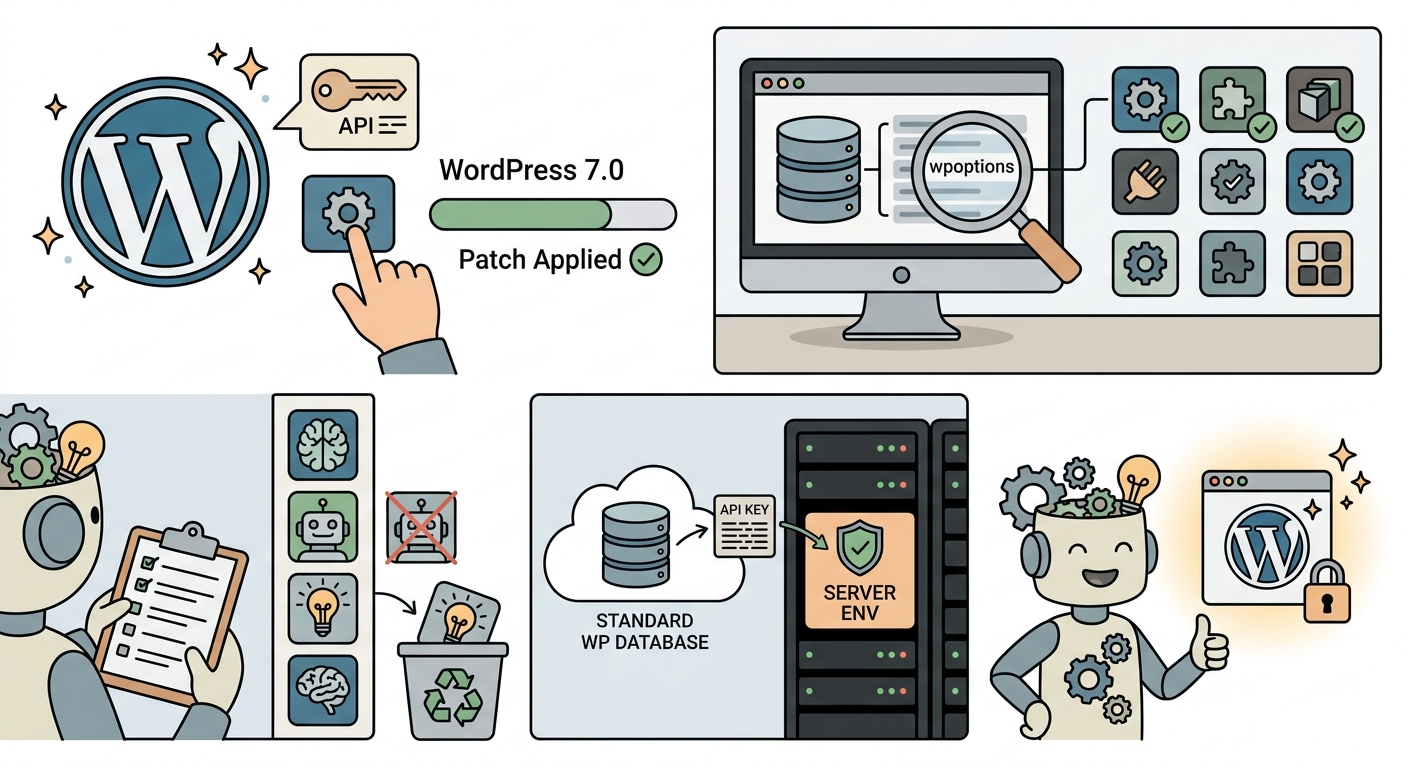
If your WordPress site has any AI plugin connected with an API key, take these steps today: check whether the WordPress 7.0 patch addressing the autofill vulnerability has been applied, review which plugins have access to your wpoptions database table where API keys are stored, audit your AI plugin list and remove anything unused, and if possible move API key storage to environment variables at the server level rather than the WordPress database.
This is not alarmist — it is basic security hygiene for a new and real threat category.
💬 Reddit — r/Wordpress and r/webdev threads on the WordPress 7.0 API key vulnerability: 🔗 https://www.reddit.com/r/Wordpress/search/?q=WordPress+7.0+AI+API+key+security+vulnerability
🐦 X/Twitter — security researchers discussing the WordPress 7.0 AI key theft risk: 🔗https://x.com/search?q=WordPress+7.0+AI+API+key+hack+2026&f=live
💬 Quora — how to protect WordPress AI API keys from theft in 2026: 🔗https://www.quora.com/search?q=protect+WordPress+AI+API+keys+security+2026
Quick Links:
