Two VPNs, both well-respected, both showing up constantly on “best of” lists, and I wanted to actually know which one deserved a permanent place on my devices instead of just trusting someone else’s ranking.
So I ran Surfshark and ProtonVPN in parallel for several weeks, same phone, same laptop, same home network, same daily routine. Here’s exactly what I found, numbers included.
Cutting to the Chase
Surfshark comes out ahead for most people, and the deciding factor isn’t even close: device limits. ProtonVPN is a genuinely well-built, principled service, and I’ll spend real time crediting what it does well.
But once you factor in unlimited connections, bundled antivirus, and identity protection, Surfshark’s overall package pulls noticeably ahead.
Here’s the breakdown.
What You’ll Actually Pay
Term | Surfshark | ProtonVPN |
Monthly | $16.45-$21.85 | $9.99-$12.99 |
1-Year | $3.39-$7.49/mo | $2.99-$9.99/mo (VPN Plus) |
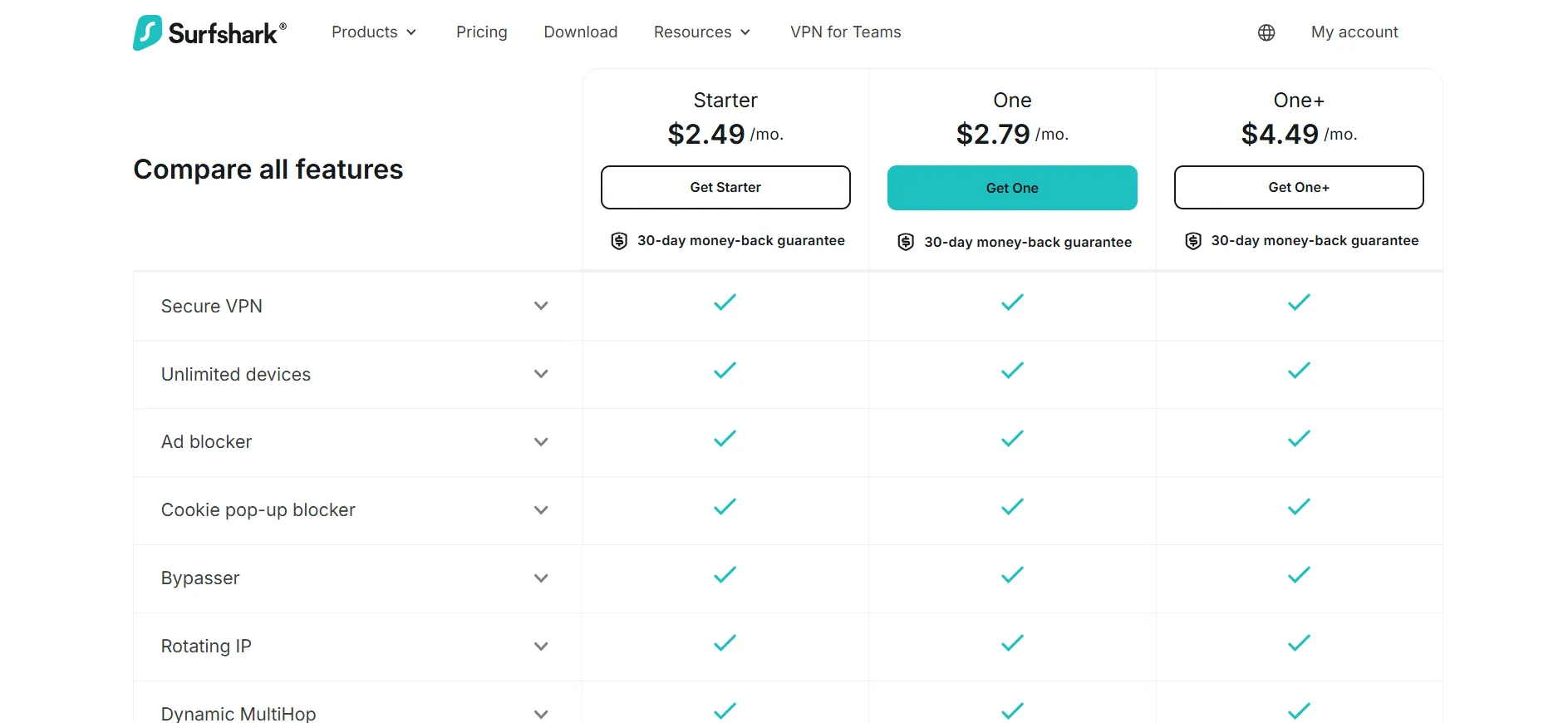
2-Year | $2.49-$4.49/mo | $2.99/mo (VPN Plus) |
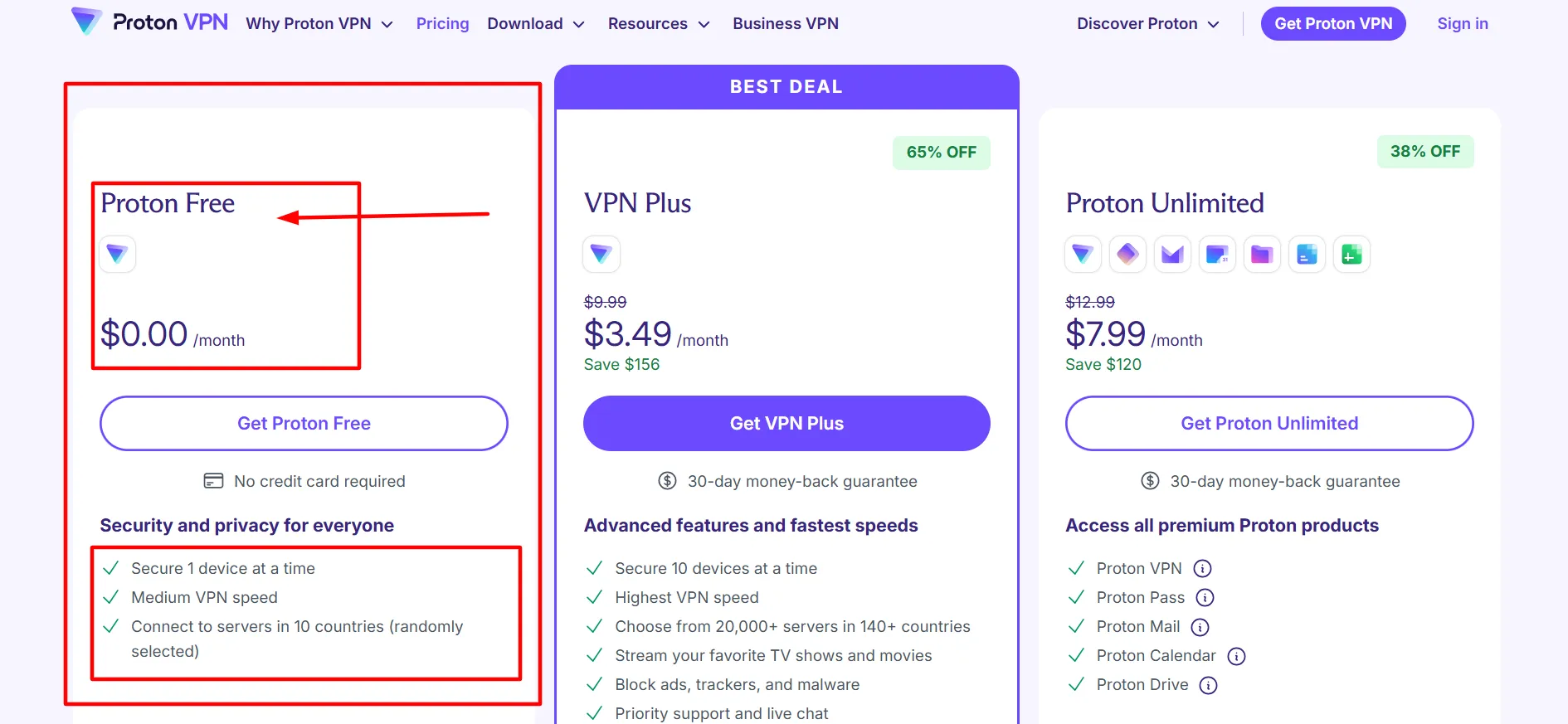
Free-forever plan | No | Yes |
Free trial | 7 days | Not offered |
Money-back window | 30 days | 30 days |
Looking purely at the sticker price, ProtonVPN’s long-term rate seems to undercut Surfshark. But there’s a real catch buried in that number: ProtonVPN’s paid tier stops at 10 devices connected at once.
Surfshark places no limit at all, on any plan, ever. If your household is running phones, laptops, a tablet or two, and a smart TV, that unlimited-device policy alone can flip which service actually costs less in practice.
Feature-by-Feature, Honestly
Let me be clear upfront: ProtonVPN earns its reputation. It comes from the same team behind Proton Mail, it’s headquartered in Switzerland (a legitimately strong jurisdiction for privacy protections), the code is fully open source and independently audited, and the whole operation runs through a non-profit structure rather than a standard for-profit model. If privacy philosophy is your main decision driver, those points carry real weight.
Still, laying the actual feature sets side by side told a clearer story than I expected:
Category | Surfshark | ProtonVPN |
Devices at once | Unlimited | 10 (Plus), 1 (Free) |
Total servers | 4,500+ | 17,200-20,500+ |
Country coverage | 100 | 120-148 |
Speed (independent testing) | 1615 Mbps | ~850 Mbps |
Antivirus bundled | Yes | No |
Ad/tracker blocker | CleanWeb | NetShield |
Dark web monitoring | Yes (One+) | Not available |
Identity theft coverage | Up to $1M (One+) | Not offered |
Split tunneling | Yes | Yes |
Kill switch | Yes | Yes |
Open source | Partial | Fully |
Fair’s fair: ProtonVPN’s server network is genuinely bigger, both in raw numbers and country reach. That’s a real advantage if broad coverage matters most to you. But a bigger network doesn’t automatically mean a faster one, and independent speed testing shows Surfshark running at nearly double ProtonVPN’s throughput. That difference showed up in real use too, heavier tasks like large downloads and video calls simply felt more solid on Surfshark throughout my testing.
The Security Gap I Wasn’t Expecting
Here’s what actually caught me off guard. ProtonVPN doesn’t include antivirus protection anywhere in its lineup. NetShield covers ad and malware blocking, which is a genuinely useful feature, but it’s not the same thing as dedicated antivirus software actively scanning your device for threats.
Surfshark’s One and One+ tiers bundle a complete antivirus engine directly into the subscription. One+ takes it further still, adding dark web breach monitoring (Alert), a disposable identity tool for online signups (Alt ID), a private search engine (Search), and identity theft coverage up to $1 million.
I put the breach monitoring to a real test, running an old email address I know was part of a past data leak through both services. Surfshark’s Alert picked it up right away. ProtonVPN had nothing to test against, that capability just isn’t part of what it offers.
If all you want is a basic VPN tunnel, this gap won’t affect your decision much. But if you’re already paying for privacy tools monthly, getting antivirus and identity protection wrapped into the same subscription is real, tangible value.
Where ProtonVPN Genuinely Pulls Ahead
I want to spend proper time here, because dismissing ProtonVPN’s real strengths would make this a worse, less trustworthy comparison:
A genuinely free-forever plan. No card needed, unlimited data, no countdown clock. Surfshark’s closest equivalent is a 7-day free trial, generous, but still temporary by design. Anyone wanting a permanently free VPN for light, single-device use will find ProtonVPN’s free tier among the best available anywhere.
Swiss jurisdiction and non-profit backing. For journalists, researchers, or anyone facing a genuinely serious privacy threat model, ProtonVPN’s legal home base and fully auditable, open-source code offer something a simple spec sheet can’t fully express.
A wider server footprint. More than 17,000 servers across up to 148 countries is meaningfully broader than Surfshark’s network.
These aren’t small considerations. They’re just most relevant to a narrower slice of users than the general “which VPN should I pick” crowd.
Matching the Right VPN to the Right Person
Go with ProtonVPN if: a permanently free, uncapped-data plan is your top priority, or your specific circumstances call for Swiss jurisdiction and fully open, independently audited code.
Go with Surfshark if: you want one subscription covering everything, unlimited devices, real antivirus, identity protection, and stronger real-world speeds, instead of assembling four separate tools yourself.
For most people weighing these two seriously, Surfshark comes out on top, not because ProtonVPN falls short, but because most of us aren’t specifically prioritizing Swiss privacy statutes. We’re asking a simpler question: does this cover everything I own, stay fast, and save me from buying antivirus separately.
Doing the Real Math
Say you’re covering 4 devices across a 2-year term, here’s what that actually looks like.
Surfshark One, 2-year plan: $75.33 total, covering 27 months, unlimited devices, antivirus and ad blocking bundled in. That’s roughly $2.79/month protecting your entire household.
ProtonVPN VPN Plus, 2-year plan: around $2.99/month, well within the 10-device cap for 4 devices, but no antivirus included anywhere. Factor in a separate antivirus subscription (typically $30-60/year) to match what Surfshark already bundles, and the gap in “who’s actually cheaper” closes fast, or reverses entirely.
What I Actually Noticed Day to Day
Spec sheets are useful, but they only tell part of the story. Running both services on identical networks, identical devices, identical daily routines, streaming, calls, big file transfers, here’s what stood out.
Surfshark held steady through everything, and the real-world experience matched the independent 1615 Mbps figure, downloads wrapped up faster, calls stayed smooth without the occasional hiccup I hit a few times on ProtonVPN.
To be fair, ProtonVPN performed just fine for everyday browsing and streaming. But anything bandwidth-intensive showed a clear, noticeable edge toward Surfshark.
FAQs: Surfshark vs ProtonVPN
On paper, ProtonVPN's long-term rate looks slightly cheaper. But once you factor in that ProtonVPN caps you at 10 devices and has no bundled antivirus, most households end up paying more overall to match what Surfshark already includes for a similar or lower price.
No, ProtonVPN discontinued its free trial. It offers a genuinely free-forever plan instead (limited to 1 device), plus a 30-day money-back guarantee on paid plans. Surfshark offers a real 7-day free trial in addition to its own 30-day guarantee.
Independent speed testing puts Surfshark at roughly 1615 Mbps versus ProtonVPN's approximately 850 Mbps. I felt this difference directly during heavier tasks like large downloads and video calls.
Surfshark does, bundled into the One and One+ plans. ProtonVPN doesn't offer antivirus at all, its NetShield tool handles ad and malware blocking but isn't a full antivirus solution.
ProtonVPN has real advantages here: it's Swiss-based, fully open source, and independently audited, with a non-profit structure behind it. If jurisdiction and code transparency are your top priority, ProtonVPN has a stronger case on paper.
Surfshark allows unlimited simultaneous connections on every plan. ProtonVPN caps its paid VPN Plus tier at 10 devices, and its free plan at just 1.
If you want a permanently free VPN or specifically need Swiss jurisdiction and open-source auditability, ProtonVPN is a legitimate choice. For most households wanting the most complete package, unlimited devices, antivirus, identity protection, and faster speeds, Surfshark is the stronger overall pick.
Quick Links:
My Final Take: Surfshark vs ProtonVPN
I expected this comparison to be a toss-up, two well-regarded services, mostly identical, arguing over minor details. That’s not what I found. Once device limits and bundled security tools entered the picture, the gap turned out bigger than I anticipated.
ProtonVPN still deserves genuine credit for its free tier and its Swiss, open-source, non-profit approach, real strengths for the right kind of user. But for a typical household or individual weighing these two options generally, Surfshark’s unlimited devices, faster real-world performance, and bundled antivirus and identity protection make it the stronger all-around pick, and it’s the one I kept using once testing wrapped up.
Want to see for yourself? Surfshark’s 7-day free trial costs nothing to try, and every paid plan comes backed by a 30-day money-back guarantee if it doesn’t end up being the right fit.