

The conversation about AI and job displacement has been running for years, cycling through waves of panic and reassurance. But the current moment feels different. The people raising the alarm are not science fiction writers or anxious commentators. They are the researchers who built the systems.
Geoffrey Hinton, the computer scientist known as the “godfather of AI,” said in an interview that AI will have the “capabilities to replace many, many jobs” in 2026. “We’re going to see AI get even better. It’s already extremely good,” Hinton said. “It’s already able to replace jobs in call centers, but it’s going to be able to replace many other jobs.”
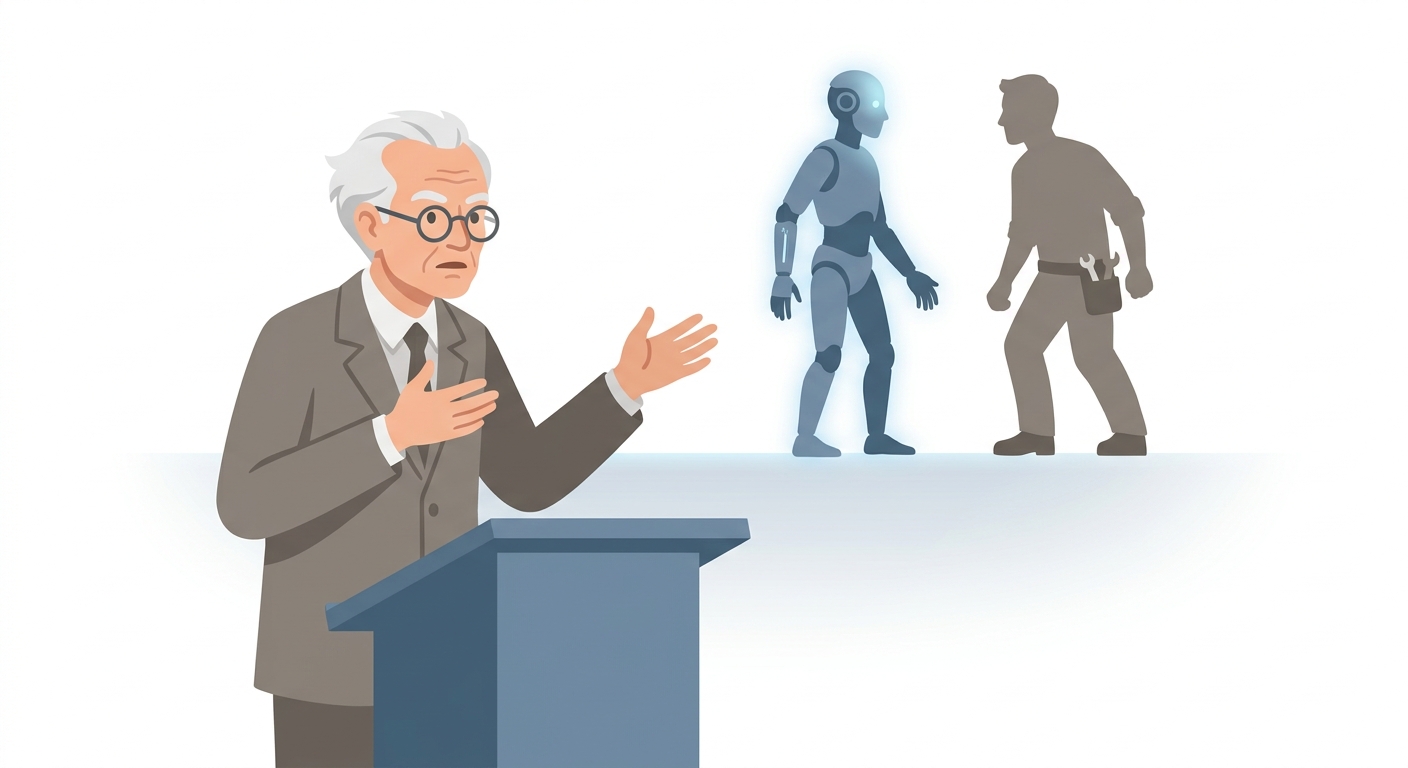
Hinton is worth listening to on this specifically because he is not making a prediction from the outside. He spent decades building the foundational neural network research that the current generation of AI models is built on. When he says the systems are capable of replacing broad categories of human work, he is not speculating. He is describing what he sees in technical architecture.
Hinton noted that AI’s progression means that after every seven months or so, it is able to complete tasks that took twice as long as before. On a coding project, AI can do in minutes what used to take an hour — and in a few years, AI will be able to perform software engineering tasks that now need a month’s worth of labor. “And then there’ll be very few people needed for software engineering projects,” Hinton predicted. aol
That timeline is aggressive. But it is consistent with what enterprise software teams are reporting. Airbnb stated earlier this year that AI now writes 60% of its new code. That figure was widely shared on tech platforms and it represents a real shift in how engineering work is being allocated.
The counterpoint
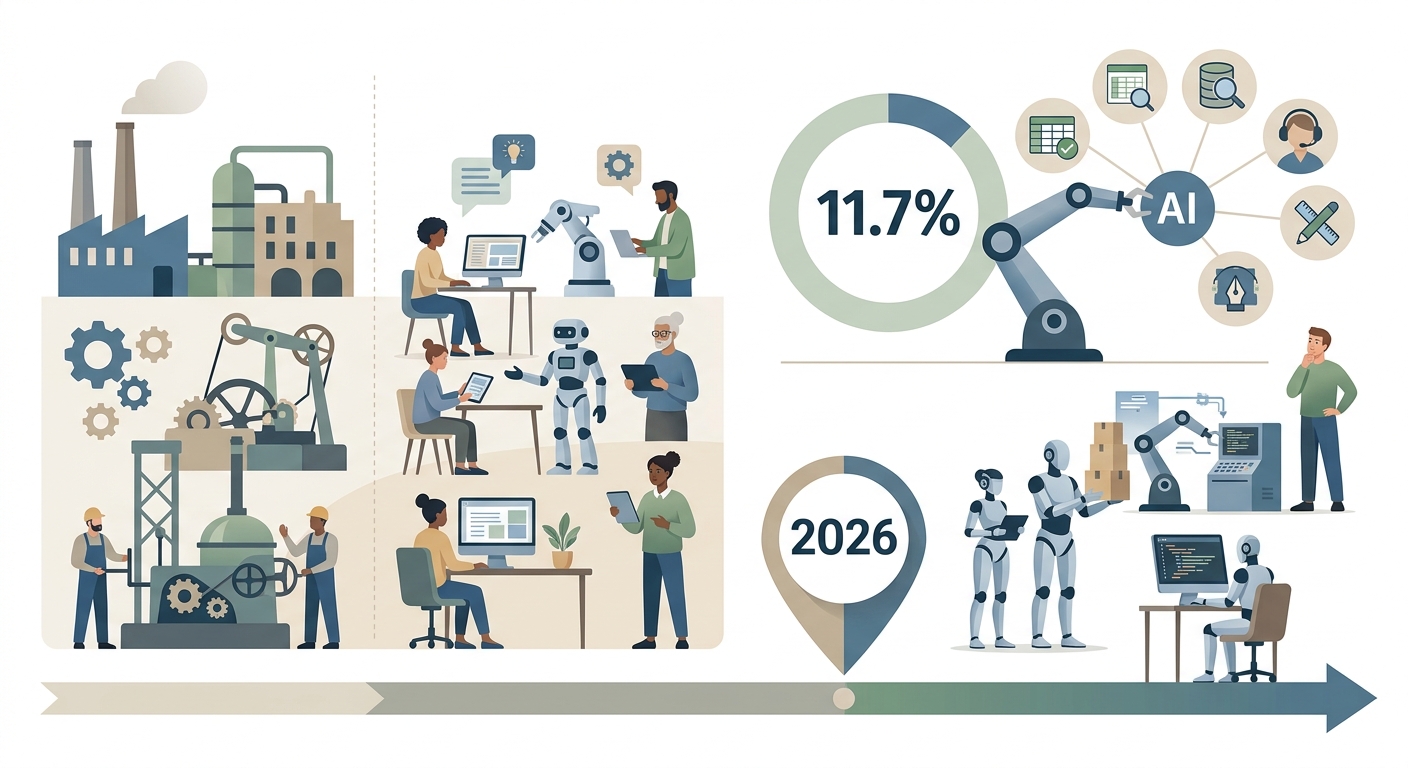
It is worth noting that the replacement thesis is contested. Many economists argue that AI will create new job categories even as it eliminates existing ones, similar to previous waves of automation.
The industrial revolution made physical labor far less central to economic output but did not produce permanent mass unemployment. AI may follow a similar pattern — though the timeline and the distribution of impact may be very different this time.
A November MIT study found that approximately 11.7% of current jobs could already be automated using existing AI technologies, with enterprise venture capitalists identifying 2026 as the inflection point when AI transitions from augmentation tool to autonomous agent capable of replacing human labor in specific domains.
💬 Reddit signal: r/Futurology and r/artificial threads on this topic run into thousands of comments. The most thoughtful discussions are the ones that separate “jobs that could be automated” from “jobs that will be automated” — the gap between technical capability and economic adoption is significant, and history suggests humans find ways to insert themselves into new workflows.
🐦 Twitter/X signal: Hinton’s comments generated significant debate on X. The threads that got the most traction were from people sharing specific examples — jobs that had already been partially replaced versus jobs where AI had simply made workers faster. The data tells a messier story than either pure optimism or pure alarm.
The honest answer is that nobody knows exactly how fast this happens or which categories get hit hardest. What is clear is that workers in roles built around repetitive cognitive tasks — data processing, basic content creation, templated customer service — are already seeing structural pressure.
Adapting now is less about predicting the future and more about not being caught flat-footed when the shift accelerates.
Quick Links:
