
Affiliate SEO Audit Services From People Who Run Affiliate Sites
Affiliate SEO is harder than it was a few years ago. Our audit shows why your review or niche site lost rankings, or why it never grew, and gives you a page-by-page plan to fix it. It is built on lessons from the affiliate sites our own team runs.
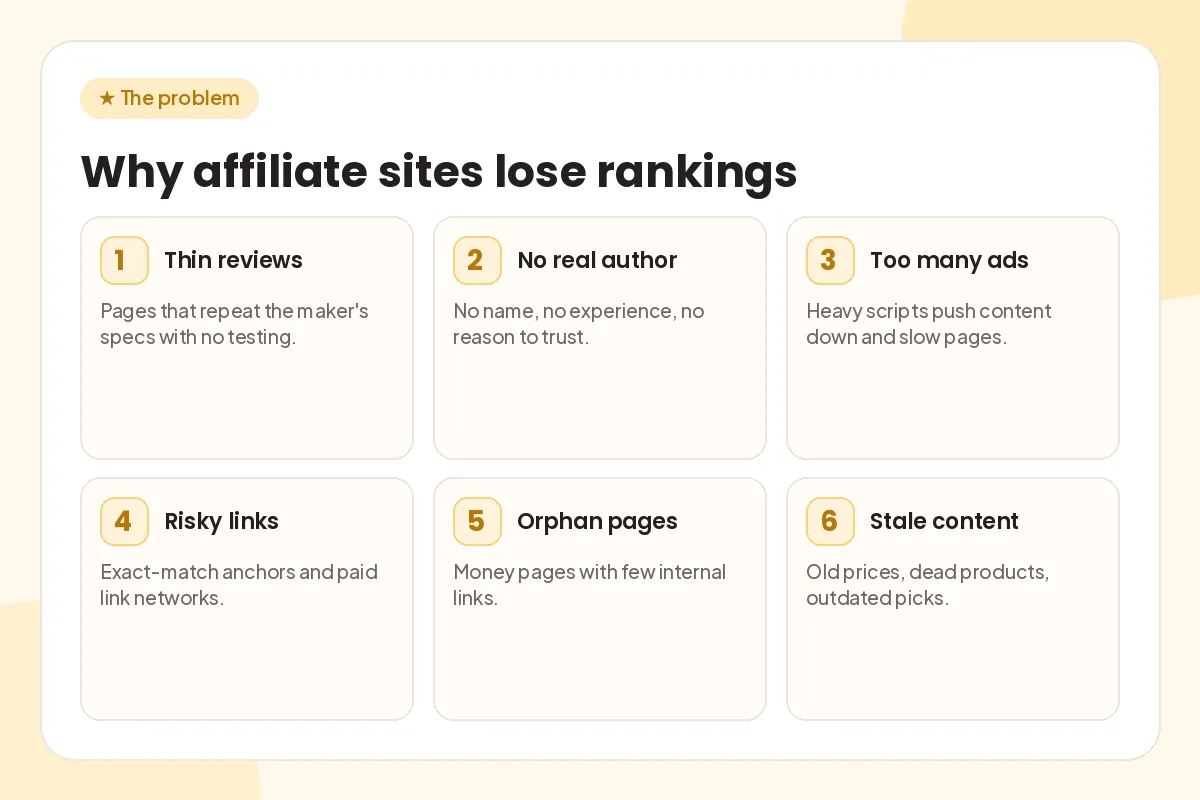
Why affiliate sites lose rankings
Many affiliate sites grew fast, then dropped after a Google core, review or helpful content update. Traffic falls, commissions fall with it, and it is hard to tell which pages caused the problem.
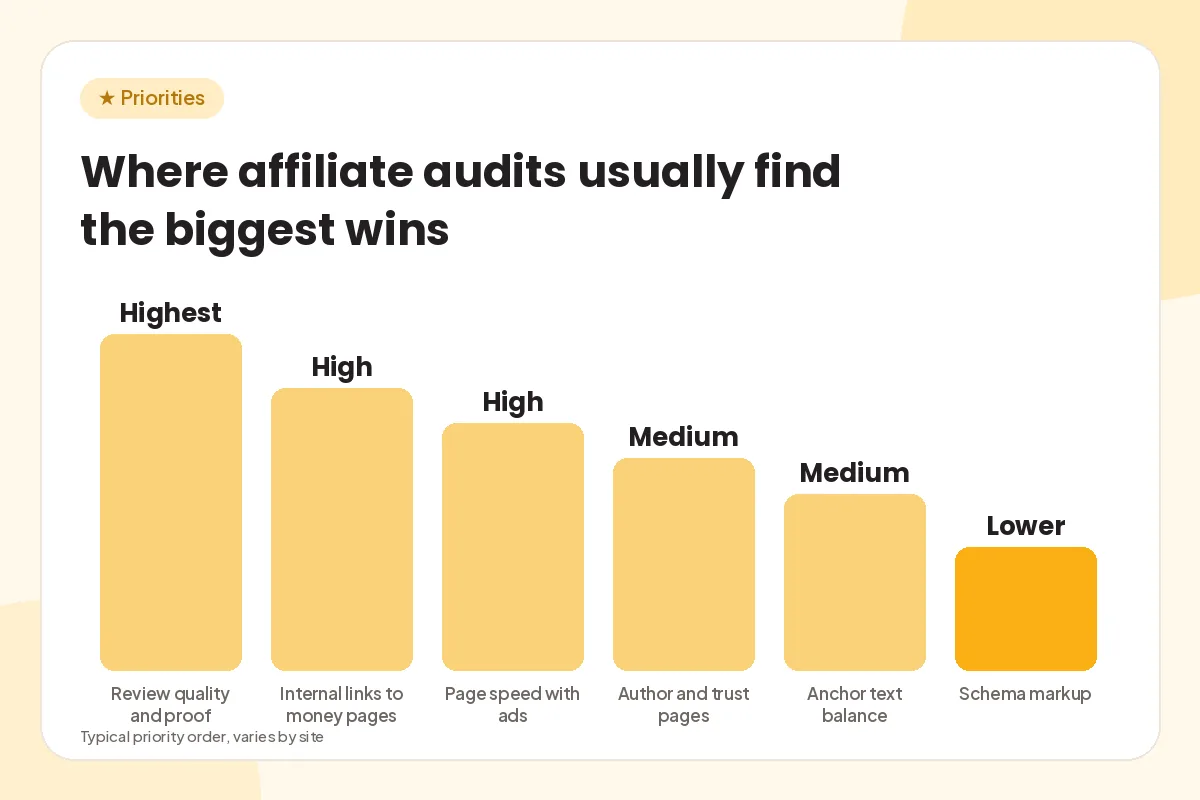
Google now rewards reviews that show real use of a product. Pages that rewrite the maker’s specs, hide the author or bury content under ads tend to lose ground to forums, brands and sites with clear first hand experience.
Signs your affiliate site needs an audit
- Traffic dropped after a Google update and has not come back.
- New reviews do not rank, even for low competition keywords.
- Clicks to merchants are falling while impressions stay flat.
- Your best pages are being outranked by Reddit, Quora or the brands themselves.


An affiliate SEO audit built from real affiliate experience
A general SEO audit checks broken links and meta tags. An affiliate SEO audit goes further. It asks whether each review deserves to rank, whether readers trust it and whether the site structure sends authority to the pages that earn money.
Our team has lived through these updates on our own content sites, including a drop of about 80% on BloggersIdeas after a core update and the clean-up that followed. The audit uses that experience, not a generic checklist.
You get a clear report, a ranked list of fixes and a review call where we explain every finding.
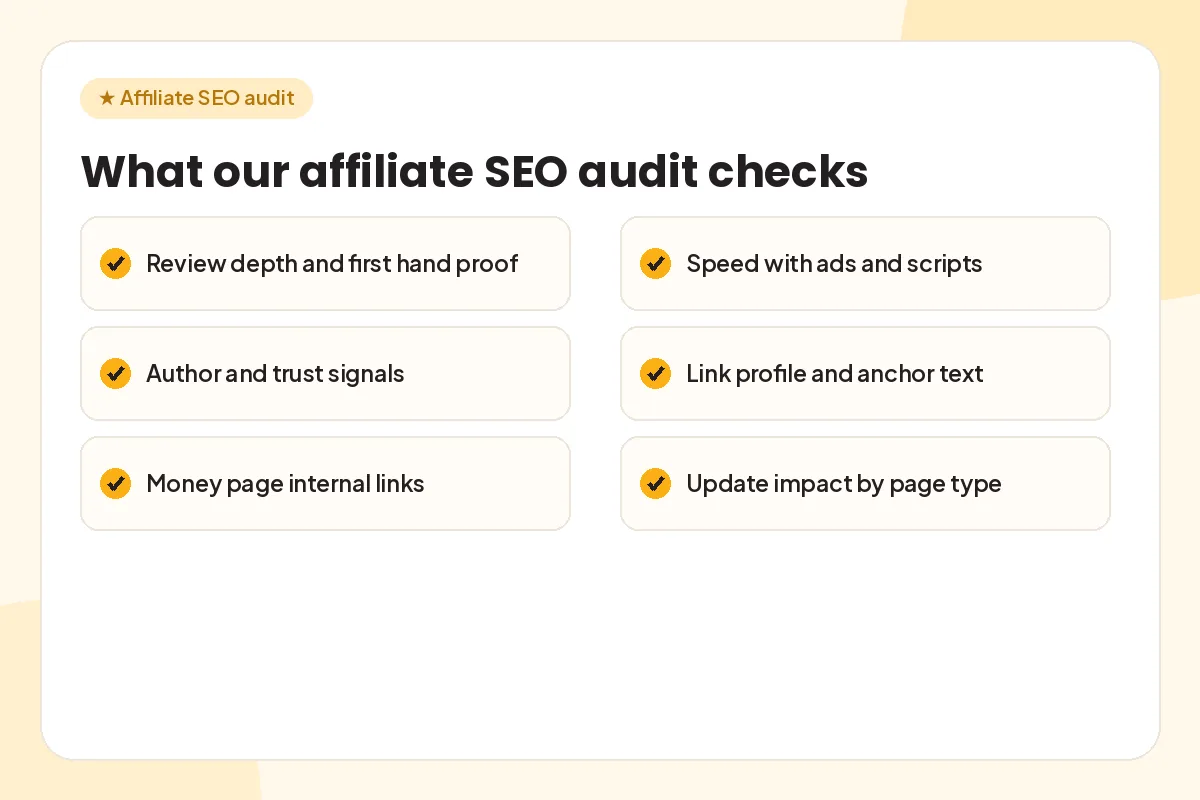
What our affiliate SEO audit covers
Six areas that decide whether affiliate content ranks today.
Review quality
Trust and authorship
Money page structure
Technical health
Link profile
Update impact
What is affiliate SEO?
Affiliate SEO is the work of getting an affiliate website’s reviews, comparisons and guides to rank in Google, so readers find them, click through to a merchant and buy. The site earns a commission on each sale, so rankings for buying-intent searches matter most.
It uses the same basics as any SEO work: keyword research, helpful content, a clean technical setup and links from other sites. The difference is the bar for trust. Because affiliate pages recommend products for money, Google looks harder at whether the advice is real, and readers do too.
That is why our audit spends as much time on content quality and trust as on technical checks.
Keyword research for affiliate sites
Not every keyword is worth the same to an affiliate site. Searches that show buying intent earn far more than broad questions, even when their volume is lower.
| Keyword type | Example | Intent |
|---|---|---|
| Best-of | best web hosting for small business | Ready to choose |
| Review | Brand X review | Checking one option |
| Comparison | Brand X vs Brand Y | Deciding between two |
| Alternatives | Brand X alternatives | Looking to switch |
| Deals | Brand X coupon or pricing | About to buy |
| How-to | how to start a blog | Learning, builds trust and links |
The audit checks whether your site covers these keyword types for your main products, whether two pages target the same search and where competitors rank for buying keywords you have missed. Our keyword research service can build the full map.
The content mix that earns commissions
Strong affiliate sites do not publish reviews alone. They build a topic with several page types that support each other.
- Best-of lists earn most of the clicks and commissions, so they need the most care.
- Single reviews go deep on one product and support the lists.
- Comparisons catch readers who are close to a decision.
- How-to guides answer early questions, earn links and point readers to the right products.
- Original data and tests give other sites a reason to link to you.
We check the balance on your site. A site with hundreds of reviews and no guides often struggles to show depth, while one with only guides leaves money on the table.
What makes an affiliate review rank today
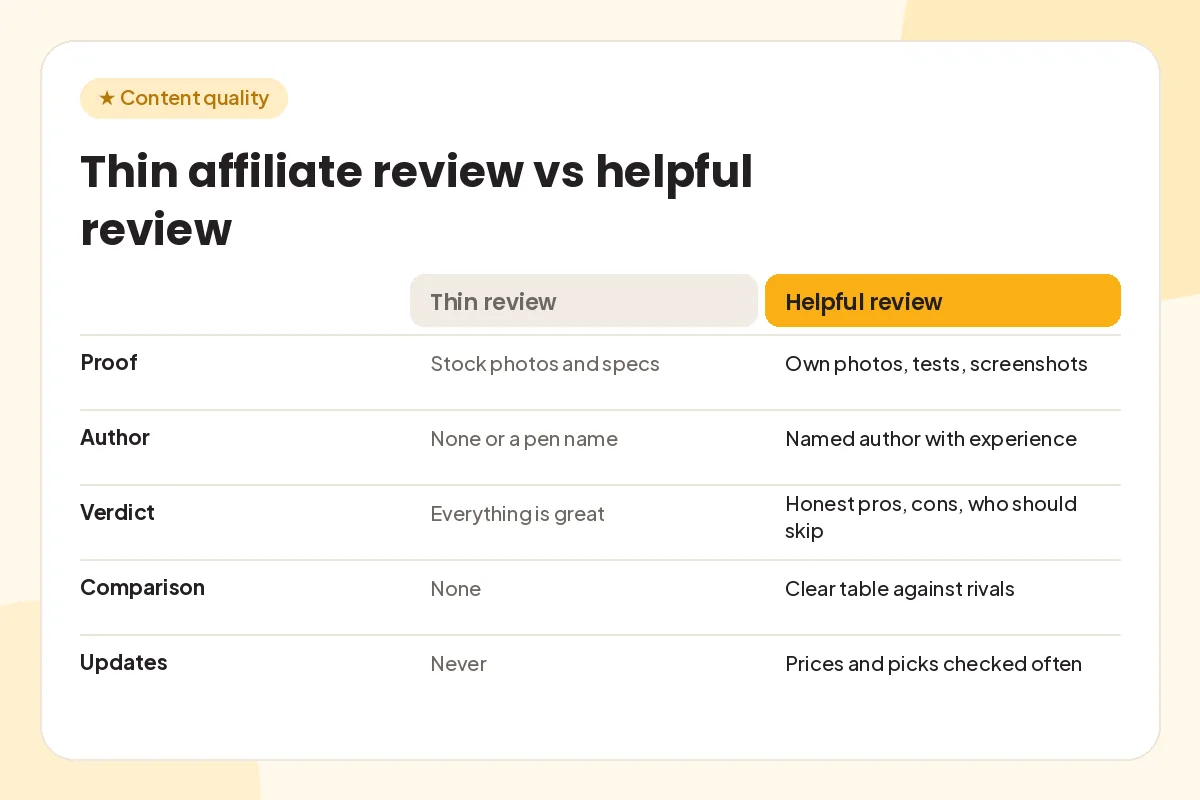
Google’s guidance on reviews asks for evidence that the writer has used the product, details that go beyond the maker’s spec sheet and a fair look at alternatives. In practice, helpful reviews share a few traits.
- Proof of use: your own photos, screenshots, test results or measurements.
- A real person: a named author with relevant experience and a bio page.
- Honest verdicts: clear pros and cons, plus who should not buy the product.
- Useful comparisons: tables that help a reader choose between options.
- Fresh details: current prices, models and links, with an update date.
The audit scores your money pages against these points and shows which ones need a rewrite, a merge or removal.


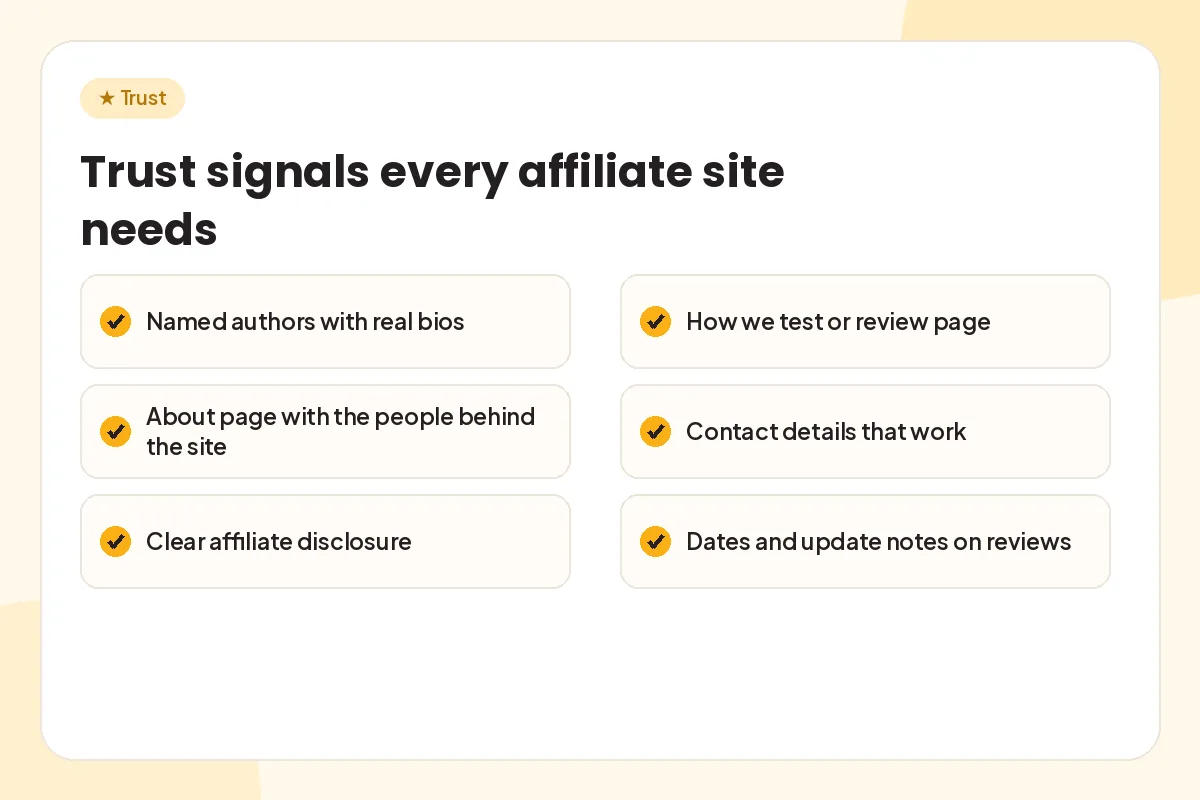
Trust signals affiliate sites often miss
Readers and search engines both want to know who is behind a site that recommends products. Many affiliate sites run under a brand name with no people, no story and no way to get in touch.
We check your about page, author pages, affiliate disclosure, editorial policy and contact details. We also look at how your reviews explain the testing process. Small changes here often help every page on the site, because trust is judged at site level as well as page level.
Internal links that send authority to money pages
Most affiliate revenue comes from a small set of reviews and “best” lists. Those pages need strong internal links from related guides, comparisons and category pages. On many sites, they get very few.
We map how links flow through your site, find orphan and weakly linked money pages and suggest exact links to add, with anchor text that reads naturally. We also flag pages competing for the same keyword, a common problem on sites with many similar reviews.
| Page type | Role | What it should link to |
|---|---|---|
| Best-of lists | Main money page | Individual reviews of each pick |
| Single reviews | Money page | Comparisons and the best-of list |
| Comparisons | Decision page | Both reviews and alternatives |
| How-to guides | Traffic and trust | Relevant reviews and lists |
Speed, ads and technical issues on affiliate sites
Display ads, comparison widgets, tracking scripts and pop-ups add up. Many affiliate sites load several megabytes of scripts before the reader sees the first paragraph, which hurts Core Web Vitals and makes readers leave.
The technical part of the audit tests your key templates on mobile, lists the heaviest scripts and shows which ones you can delay, replace or remove. We also check indexing, sitemaps, redirects, canonical tags and crawl waste from tag, author and filter pages.
For a deeper look at server and code issues, see our technical SEO audit.
Link building risks for affiliate sites
Affiliate sites often buy links or join private networks to rank faster. These links can work for a while, then become a liability when Google’s spam systems catch up.
We review your backlink profile for exact-match anchor patterns, links from obvious link farms and sudden spikes. We do not recommend mass disavows by default. Instead we explain which links carry real risk and what a safer link plan looks like, such as digital PR, original data and partnerships.
If you have a manual action, our Google penalty removal service covers the clean-up and reconsideration request.
Recovering after a Google update
Recovery starts with finding what dropped. We compare Search Console data before and after each update and group losses by page type, topic and template. This shows whether the problem is a few weak pages or the whole site.
Then we rank fixes by the traffic and revenue at stake. Usually that means improving or merging thin reviews, adding first hand proof, strengthening trust pages and cutting content that does not help readers.
Recovery takes time. Many sites only see the full effect after the next core update, so the plan focuses on lasting quality rather than quick tricks.

Schema markup for affiliate pages
Structured data helps search engines understand what a page is about. On affiliate sites, the right schema can include Article, Product, Review, FAQPage and BreadcrumbList, depending on the page.
We check that schema matches what readers can see on the page, that review ratings are real and not added to every post, and that no markup breaks Google’s rules. Fake or self-serving review stars can lead to a manual action, so we flag them early. Our founder built SchemaNinja, a WordPress schema plugin, so this is an area we know well.
How to measure affiliate SEO success
Traffic is only part of the picture. The numbers that show whether affiliate SEO is working are tied to money pages and clicks to merchants.
- Clicks and impressions by page type in Search Console, so you see whether lists, reviews or guides are moving.
- Average position for buying keywords, not just total keywords ranked.
- Outbound clicks to merchants, tracked as events in analytics.
- Revenue per page from your affiliate networks, matched to the URL that sent the click.
- Share of traffic from a few pages, which shows how exposed you are to one update.
The audit sets a baseline for these numbers, so you can see the effect of each fix.
An affiliate SEO strategy in five steps
- Pick a focused topic. Depth in one area beats thin coverage of many.
- Map buying keywords to pages. One main keyword per page, with clear intent.
- Write from real use. Test products, take your own photos and share honest verdicts.
- Link pages together. Guides support reviews, reviews support lists.
- Keep content fresh. Update prices, picks and screenshots on a schedule.
Most of the problems we find in audits come from skipping one of these steps, often the third.
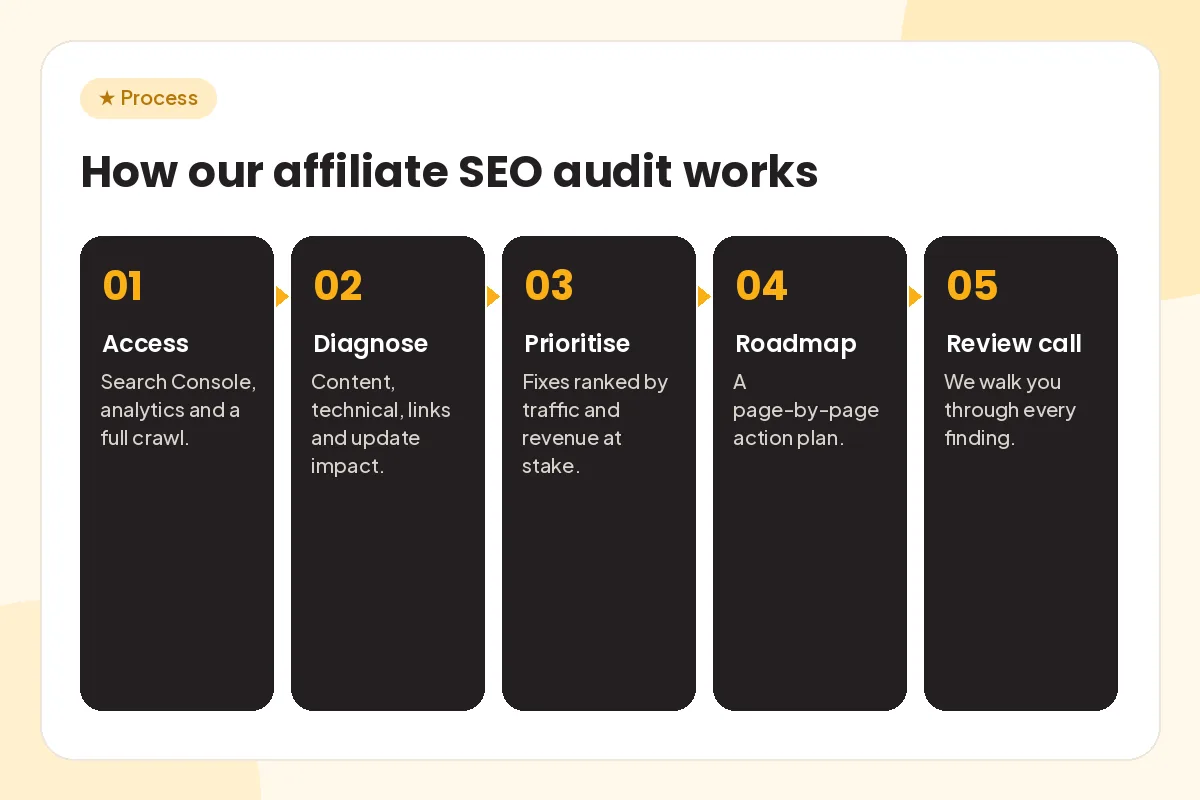
How our affiliate SEO audit works
Access
Diagnose
Prioritise
Roadmap
Review call

What you get from the audit
- A written report with clear findings, screenshots and examples from your own pages.
- A spreadsheet of money pages with a score and an action for each one.
- An internal linking plan with suggested links and anchor text.
- A technical fix list your developer can work through.
- A backlink risk summary and a safer link building plan.
- A recorded review call so your team can refer back to it.
Want us to carry out the fixes too? We can quote the work after the audit, or your own team can use the roadmap.
Which affiliate sites we audit
We audit review sites, niche blogs, comparison sites and content sites that earn from affiliate links, display ads or both. Common niches include software and SaaS, web hosting, finance tools, tech gadgets, home products and travel.
The audit fits sites of most sizes, from a growing blog with a few hundred posts to large portfolios. It is also useful before you buy an affiliate site, to check its content quality and link risk before you pay for it.
Common affiliate SEO mistakes we find
- Publishing reviews without using the product. Readers notice, and so does Google.
- Chasing volume over quality. Hundreds of thin posts can drag down the whole site.
- Same template for every review. Identical structure and wording looks automated.
- Ignoring old content. Outdated prices and discontinued products erode trust.
- Too many affiliate links and buttons. Pages that push sales too hard read as ads.
- No supporting content. Money pages need guides around them to build topical depth.
AI content and scaled pages on affiliate sites
AI tools make it easy to publish hundreds of reviews in a week. Google’s spam policies target scaled content made mainly to rank, whether a person or a tool wrote it. Many affiliate sites that grew this way lost most of their traffic.
The audit looks for signs of scaled content: near-identical intros, reviews with no proof of use, pages on products the site never tested and large batches published at once. We do not tell you to stop using AI. We show where it is hurting you and how to add the human experience and editing that make content worth ranking.
Disclosures, links and compliance
Clear affiliate disclosure is a legal requirement in many markets, including the USA under FTC guidelines and the UK under ASA rules. It also builds reader trust.
We check that each page with affiliate links has a disclosure near the top, that links use rel=”sponsored” or rel=”nofollow”, and that cloaked links and redirects work and do not break tracking. We also check merchant terms you may have missed, such as rules on brand bidding or coupon use, when they affect your content.
How often should you audit an affiliate site?
A full affiliate SEO audit once a year suits most sites. Run one sooner after a big traffic change, before a site redesign or migration, or before you buy or sell a site.
Between full audits, a light monthly check keeps you on track: review traffic by page type, scan for broken affiliate links and update the five pages that earn the most. After each Google core update, compare the weeks before and after so you can spot problems early, while they are still small.
Why affiliate marketers choose DigiExe
Short claims you can check.
Founder who runs affiliate sites
Industry speaker
1,400+ clients in 28 countries
Tested on our own sites
Recovery and growth on content sites
Our published case studies show traffic growth and recovery on content sites, including BloggersIdeas, which went from 2,500 to 4,000 daily clicks after an update clean-up.
Quick affiliate SEO checks you can do today
Before an audit, a few quick checks can show how much work your site needs.
- Open your top five money pages. Do they show your own photos or test results?
- Click your author name. Is there a real bio with relevant experience?
- Test a review on mobile. How far do you scroll before the first useful paragraph?
- In Search Console, compare the three months before and after the last core update.
- Search your main keyword. What type of pages rank now, and how is yours different?
If these checks raise more questions than answers, an audit will give you a clear plan.
Questions to ask before hiring an affiliate SEO agency
Many agencies sell SEO, but few understand how affiliate sites make money. Ask these questions before you hire anyone, including us.
- Do you run affiliate sites yourself? Hands-on experience shows in the advice.
- How do you decide which pages to fix first? The answer should mention revenue, not just traffic.
- What is your view on bought links? Be wary of anyone who promises fast results from link packages.
- How do you handle AI content? Look for a clear editing and proof process.
- What will I receive? Ask for a sample report so you know the depth before you pay.
A good audit partner explains the reason behind each recommendation and is honest about what may not recover.
What to do in the first 90 days after the audit
Start with the fixes that protect revenue: improve or merge your weakest money pages, add first hand proof to your top reviews and fix any technical issue that blocks indexing. In the second month, strengthen trust pages and internal links. In the third, refresh supporting guides and start a safer link plan.
Track clicks by page type each week, so you can see which changes help. Most sites see the clearest movement after the next core update.
Services that pair with an affiliate SEO audit
Fix what the audit finds, or go deeper on one area.

Jitendra started BloggersIdeas in 2013, runs AffiliateBooster and SchemaNinja, and has spoken at Affiliate Summit and Affiliate World. He reviews the audit checklist our team uses on affiliate sites.
Jitendra started BloggersIdeas in 2013, runs AffiliateBooster and SchemaNinja, and wrote the international bestseller Inside A Hustler's Brain (20,000+ copies). He has spoken at Affiliate Summit, Affiliate World, DMSS and TES, and works from New Delhi.
Last updated:
Affiliate SEO audit: FAQs
What is an affiliate SEO audit?
An affiliate SEO audit is a review of an affiliate or review website that checks the things that decide affiliate rankings today. It covers review quality, first hand proof, trust signals, internal links to money pages, technical health, link risk and update impact, then turns the findings into a ranked, page-by-page plan you can act on.
How is it different from a normal SEO audit?
A normal audit focuses on technical issues such as broken links, redirects and meta tags. An affiliate audit adds checks that matter for review sites: whether each review shows real use, whether authors are credible, how links flow to money pages and how much ads and scripts slow the site. It also measures losses from each Google update.
Can an audit help my site recover from a Google update?
Yes, an audit is the first step. It shows which pages and templates lost traffic and why, so you fix the real causes instead of guessing. Recovery itself depends on doing the work and often shows fully only after a later core update, so the plan focuses on lasting improvements to quality and trust.
What access do you need?
We need view access to Google Search Console and Google Analytics. Admin access to WordPress helps but is not required for the audit. We crawl the site ourselves and pull backlink data from our tools. If you have revenue data by page, sharing it helps us rank fixes by the commissions at stake.
How long does the audit take?
Timing depends on the size of the site. A blog with a few hundred posts takes less time than a site with thousands of pages. We confirm the timeline in your quote before we start, and you get a review call once the report is ready so you can ask questions about every finding.
Will you tell me to delete content?
Sometimes. Thin, outdated or duplicate posts can hold back the rest of a site. We recommend removal only when a page has no traffic, no links and no realistic way to become useful. More often we suggest merging similar posts or improving them, and every recommendation comes with a reason you can check.
Do you check affiliate links and disclosures?
Yes. We check that affiliate links use the right attributes, such as rel sponsored, that disclosures are clear and placed where readers see them, and that pages do not look like ads because of too many buttons. Clear disclosure builds reader trust and is required by rules such as the FTC guidelines in the USA.
Can you audit a site I am thinking of buying?
Yes. A pre-purchase audit checks content quality, link risk, traffic history across updates and technical health before you pay. It can reveal problems a seller may not mention, such as bought links, thin content or a recent traffic drop, and helps you judge whether the asking price is fair.
Do you also do the fixes?
We can. After the audit, we can quote content rewrites, internal linking, technical fixes and link clean-up. Many clients use our roadmap with their own writers and developers instead. Either way, the plan is written so that anyone on your team can follow it without needing us to explain it again.
Is affiliate SEO still worth it?
Yes, for sites that offer real value. Google still ranks helpful reviews and comparisons, but it is harder for thin content to compete. Sites that test products, show proof, build trust and cover a topic in depth keep growing. The audit shows how far your site is from that standard and what to fix first.
Which niches do you work with?
We audit sites in software and SaaS, web hosting, finance tools, tech, home products, travel and many other niches. The core checks are the same in every niche, while the content review looks at the specific proof readers expect, such as test results for tech or hands-on screenshots for software.
Find out what is holding your affiliate site back
Send us your site and a short note on what changed. We will confirm the scope and send a clear quote for the audit.
Brands We Have Worked With
A few of the businesses that have trusted DigiExe and our founder with their marketing.


What our clients say about DigiExe